
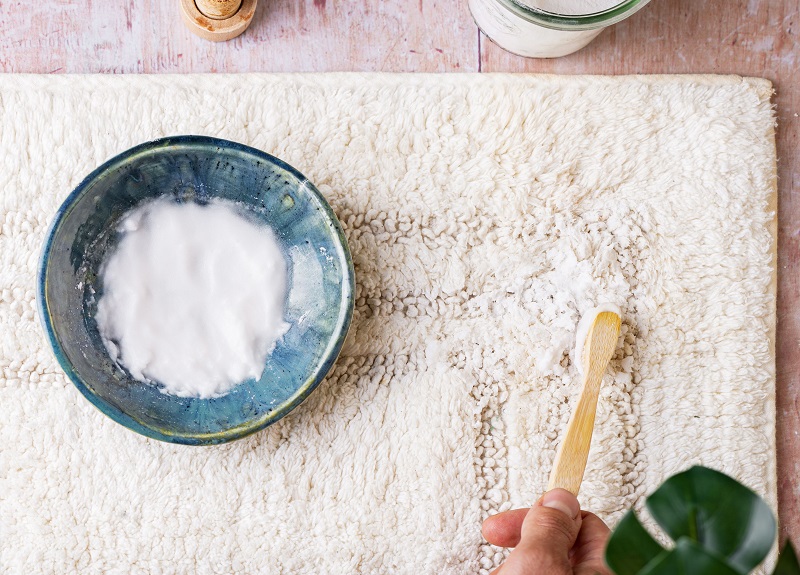
Why spend a fortune on fancy bottles with unpronounceable ingredients when you can mix up your own carpet shampoo at home?
It’s quick, satisfying, and surprisingly effective. Plus, you’ll be using ingredients you can actually recognise.
Think gentle on fibres, safe for little feet and paws, and friendly to the environment. Besides making your floors sparkle, you’ll also get bragging rights.
Gather Your Ingredients
The beauty of homemade carpet shampoo is its simplicity. Chances are, most of the ingredients are already sitting in your kitchen cupboards, waiting to be turned into a powerful cleaning solution.
You’ll need:
- Baking soda;
- White vinegar;
- Fresh lemon juice;
- Distilled water;
- Liquid castile soap;
- Optional: Essential oils such as tea tree or lavender.
Distilled water is generally better for cleaning carpets. It doesn’t have the minerals found in tap water, which often leave behind an unsightly residue.
You can also use scented extracts for an extra bit of freshness. To that end, you’ll notice that essential oils pull double duty. They leave your carpets smelling lovely and keep things naturally sanitised.
Mix It All Together
Start by combining equal amounts of baking soda and white vinegar in a large container. It’ll fizz like a science experiment, but that’s completely normal.
Once it calms down, gently stir in the castile soap and distilled water. Go easy to avoid turning your mixture into a bubble bath.
Pour the solution into a clean spray bottle. It’s better to use a funnel so it doesn’t spill everywhere. Having done that, place a label on it with the name and date. Keep your mixture in a cool, shady place, and it should stay effective for about a month.
Preparing carpet shampoo in advance can really speed things up when you’re ready to clean, and if you need more for a larger area, just double or triple the amounts.
Test for Colourfastness
Before going all in, it’s wise to test your homemade shampoo on a small, hidden part of the carpet. Dab on a little, and give it 10 to 15 minutes to see if there’s any change in colour or texture.
Take note of which rugs respond well, especially if you have a mix of fibres at home. Synthetic carpets usually take this treatment like champions, but natural fibres can be real divas.
If you’ve done this before and know your carpet won’t throw a tantrum, feel free to skip the test to save time. Older rugs respond better to a gentler touch. Treat them kindly, and they’ll retain their charm for years to come.
Apply the Shampoo
Now comes the fun part. Spray the mixture evenly over your carpet, paying extra attention to any tenacious spots. Use a soft brush or cloth to gently work it in. Think soothing massage, not aggressive scrubbing.
Don’t flood the carpet. A light hand gets better results and avoids soggy disasters. Starting at the far end of the room means you won’t end up walking over your freshly cleaned masterpiece.
Gloves are a good idea too, even natural cleaning products can be hard on the skin.
Let the solution sit for 10 to 15 minutes, as it needs a moment to do its thing. Give it a chance to break down the muck. If the stain still won’t take the hint, give it another good scrub.
If you’re dealing with truly wicked soiling, it’s time to call in professional carpet cleaning services. They have the equipment and the know-how to eliminate the worst offenders.
Rinse and Dry the Carpet
This final step determines whether your cleaning efforts succeed or leave you with sticky residue.
Remove the excess shampoo by blotting it with a clean cloth, then follow with a light rinse using a water and vinegar solution. This lifts away soap without harming the fibres.
Try to keep the carpet from getting too wet. Too much moisture can cause mould and ruin the backing underneath. Clean one section at a time, and make sure it feels just damp, not soaked.
Good airflow makes drying quicker and helps prevent musty smells. Open windows on opposite sides of the room for cross-ventilation, or set up fans to keep the air circulating.
Avoid walking on the carpet while it’s still damp, as this can flatten the fibres and slow down the drying process. It typically takes four to eight hours, depending on humidity levels, carpet thickness and air circulation.
Plan your cleaning for a day when the room won’t be needed, and consider running a dehumidifier if the weather is particularly humid.
Store Any Leftover Shampoo
You’ll probably have some leftover mix, but you don’t have to throw it away. Store it for later. Just put it into an airtight container, with a proper label, showing what’s inside and when you made it.
A cool, dark cupboard works perfectly for storage. Glass jars are your best option here, as they won’t absorb any lingering scents or affect the mixture’s quality.
Before using the stored solution, give it a quick inspection. If it seems to be having an identity crisis, presenting a different consistency or odd colours, bin it right away. Later on, you can make a fresh batch.
Your DIY shampoo should stay effective for a few months when stored properly.
If you accidentally prepared too much, consider sharing with neighbours or friends. It’s a nice way to spread the word about homemade cleaning products. Plus, they might return the favour with their own kitchen experiments.
Clean Your Equipment
Your cleaning tools deserve the same attention you’ve just given your carpet. A quick wash after each session keeps everything in good working order and prevents the grim buildup that makes tools less effective over time.
Give your bowls, brushes, and spray bottles a thorough wash with warm water. For any stubborn soap residue clinging to brushes or sponges, a water and vinegar rinse works wonders.
Let everything dry completely before putting it away. Damp tools stored in dark cupboards are an open invitation for mould, and nobody wants that unpleasant surprise.
Finally, try to store everything together in one spot so you won’t have to play hide and seek with your spray bottle when you need it the most.
Troubleshooting and Recipe Variations
Sometimes your homemade shampoo doesn’t perform quite as expected. In such cases, a few adjustments would be necessary.
If the mixture seems too weak for stubborn stains, add an extra tablespoon of baking soda to boost its cleaning power.
For carpets that foam excessively during cleaning, you’ve probably been a bit generous with the castile soap, so dilute it with more distilled water.
When dealing with greasy stains, add a squeeze of fresh lemon juice to cut through the oil. Pet accidents respond well to an extra splash of white vinegar, which helps neutralise odours at the source rather than just masking them.
For delicate or antique carpets, create a gentler version by halving the baking soda and vinegar quantities, while keeping the water and soap amounts the same. This milder formula still cleans effectively, without being too aggressive on precious textiles.
If you’re tackling a particularly grubby carpet, make a stronger version by doubling the baking soda content. Just remember to test this more potent mixture in that inconspicuous corner first, as it might be too intense for some carpet types.
Conclusion
Effective carpet cleaning doesn’t require a chemistry degree or a hefty budget. A handful of ingredients is quite sufficient to tackle the most challenging carpet situations.
Ready to give it a go? Start with a small batch and scale up as needed. When you see how well it works, you’ll wonder what you were really paying for all those years.
