
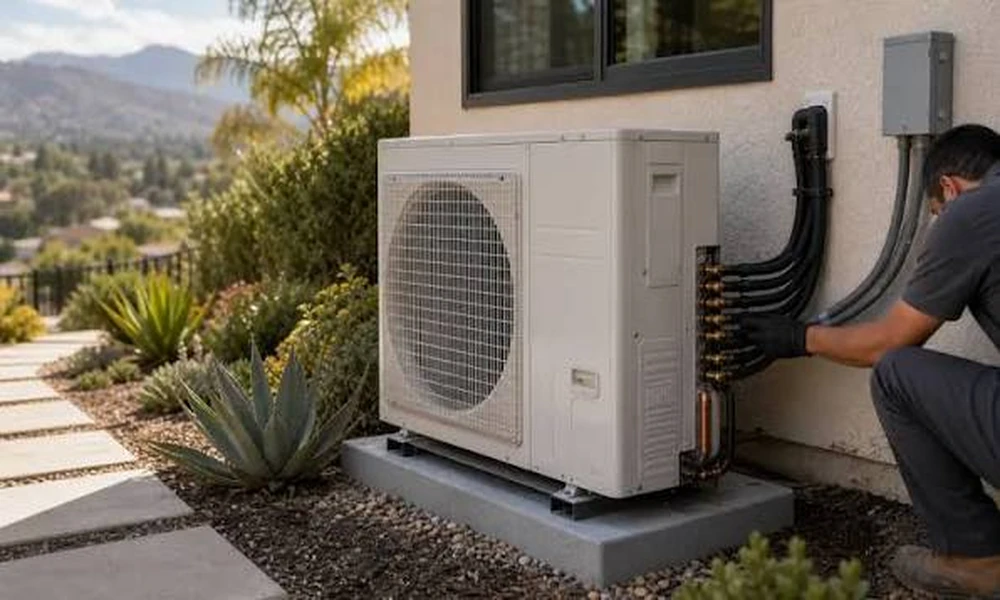
Winter in Northeast Georgia rarely settles into one pattern. A mild afternoon can give way to a freezing night, while occasional ice storms create problems no efficiency rating can solve. The right heating system needs to handle ordinary winter weather without becoming expensive or uncomfortable when temperatures fall.
For homeowners considering replacement, Economy Heating & Air in Cornelia is one local option for discussing heating needs in Gainesville and the surrounding foothills. Before requesting a quote, understanding the differences between heat pumps, furnaces, and combined systems makes that conversation more useful.
What the Local Climate Means for Your Choice
North Georgia is generally well suited to heat pumps, but elevation, wind exposure, and the house itself matter. A sheltered home in Hall County may have different heating requirements from a drafty property farther into the mountains.
A heat pump transfers outdoor heat indoors rather than producing it through combustion. As temperatures fall, its efficiency generally declines, and its available heating capacity depends on the model.
There is no universal temperature at which heat pumps stop working effectively. Modern inverter equipment adjusts its output, and some cold climate models deliver substantial heating capacity at 5°F or below. Buyers should compare published capacity and efficiency at low temperatures, not simply look for a cold climate label.
The crucial number is the thermal balance point: the outdoor temperature at which the home’s heat loss matches the heat pump’s capacity. Below that point, supplemental heat may be necessary. Better insulation and air sealing can reduce that need.
Three Heating Setups Compared
| Consideration | Furnace with central AC | Heat pump | Dual fuel |
|---|---|---|---|
| Winter energy source | Natural gas or propane | Electricity | Electricity plus gas or propane |
| Mild weather operation | Burns fuel whenever heating | Often highly efficient | Uses the heat pump |
| Severe cold | Maintains heat if properly sized | Performance varies; backup may operate | Furnace takes over |
| Summer cooling | Separate AC equipment | Same system provides cooling | Heat pump provides cooling |
| Outage planning | Electrical backup still required | Usually greater generator demand | Furnace operation may need less generator capacity |
| Installation cost | Depends on existing infrastructure | Depends on model and electrical work | Often higher because two heating sources are involved |
A furnace supplies noticeably hotter air, which some households prefer. Heat pump air can feel less warm at the register while still maintaining the thermostat setting.
Dual fuel combines both approaches. Controls switch between the heat pump and furnace according to temperature, capacity, or operating cost. That switch should reflect the actual equipment and local energy rates, not an arbitrary setting used for every house.
Compare Running Costs, Not Just Efficiency Labels
For heat pumps, HSPF2 measures seasonal heating efficiency, while SEER2 describes cooling efficiency. Furnace efficiency is expressed as AFUE. A furnace rated at 95% AFUE converts approximately 95% of its fuel energy into useful heat under standardized testing.
These ratings help compare equipment, but they do not determine your bill alone.
A practical comparison uses the cost of delivering the same amount of heat. For 100,000 Btu:
- A heat pump uses approximately 29.3 divided by its coefficient of performance, or COP, in kilowatt hours.
- A natural gas furnace uses approximately one divided by its AFUE expressed as a decimal, in therms.
For illustration, electricity at 15 cents per kilowatt hour and a COP of 3 produce a heating cost of about $1.47. Gas at $1.50 per therm through a 95% furnace costs about $1.58. These are examples, not local rate quotes.
Cold weather can reduce the heat pump’s COP and change the result. Resistance backup, propane prices, gas service charges, and duct losses also affect household spending.
Installation quotes should separate equipment, duct repairs, electrical upgrades, permits, and controls. A low equipment price can hide necessary work.
Refrigerants and Incentives Have Changed
The federal refrigerant transition restricts higher global warming potential refrigerants in new equipment. For many residential systems, the manufacturing and import restrictions took effect in 2025, with separate installation transition provisions.
Many new models now use R454B or R32 instead of R410A. Both are classified as A2L, meaning lower flammability. They require compatible equipment and appropriate installation practices; some systems include refrigerant detection and mitigation features.
Existing R410A equipment can still be serviced. There is no general requirement to replace a functioning system simply because refrigerant rules changed. Neither R32 nor R454B is a drop in replacement for R410A.
R22 equipment deserves closer financial scrutiny because new production and import for servicing ended in 2020. However, repair decisions should still consider leak severity, equipment condition, and the complete replacement cost.
Federal tax advice also needs updating. The Energy Efficient Home Improvement Credit under Section 25C, which previously offered up to $2,000 for qualifying heat pumps, is unavailable for property placed in service after December 31, 2025.
Utility rebates and state administered programs have separate requirements. Confirm eligibility before purchasing. Financing spreads payments; it does not automatically reduce total cost.
Installation and Outage Planning Matter
A dependable proposal should address several details:
- Sizing: A Manual J load calculation evaluates the building rather than relying on floor area or the old equipment’s capacity.
- Ductwork: Leakage, poor insulation, and restricted airflow can undermine otherwise efficient equipment.
- Humidity: Correctly sized variable capacity equipment can support longer cooling cycles and better summer moisture removal.
- Controls: Large thermostat increases can trigger resistance backup on some heat pumps. Proper recovery settings help.
- Defrost: Outdoor frost and occasional steam during defrost can be normal. Persistent ice buildup needs inspection.
Gas furnaces still need electricity for controls, ignition, and the blower. A suitably sized generator may support a furnace more easily than a heat pump, but compatibility and electrical requirements need professional assessment. Never connect a generator through a household outlet or operate one indoors.
Repeated breakdowns, rising bills, and uneven temperatures justify evaluation, not automatic replacement. Suspected combustion problems require prompt professional attention. If a carbon monoxide alarm sounds, leave immediately and contact emergency services.
Choose Around the House
A well insulated home without gas service often suits a modern heat pump. Existing gas infrastructure, high heating demand, or outage priorities may favor a furnace or dual fuel.
The strongest decision combines a load calculation, comparable installation quotes, actual utility rates, and a realistic backup plan. Brand preference comes afterward.
