
Slips and trips are a leading cause of workplace accidents across the UK. From busy industrial settings to commercial kitchens and public walkways, ensuring floor safety is essential for compliance and risk prevention. Resin flooring systems have become increasingly popular for their durability, chemical resistance and seamless finish—but did you know they can also be customised to reduce slip and skid risks?
In this guide, we explore everything you need to know about anti slip and anti skid resin floors, including how they work, where they are used and how to choose the right system for your environment.
What Are Anti Slip and Anti Skid Resin Floors?
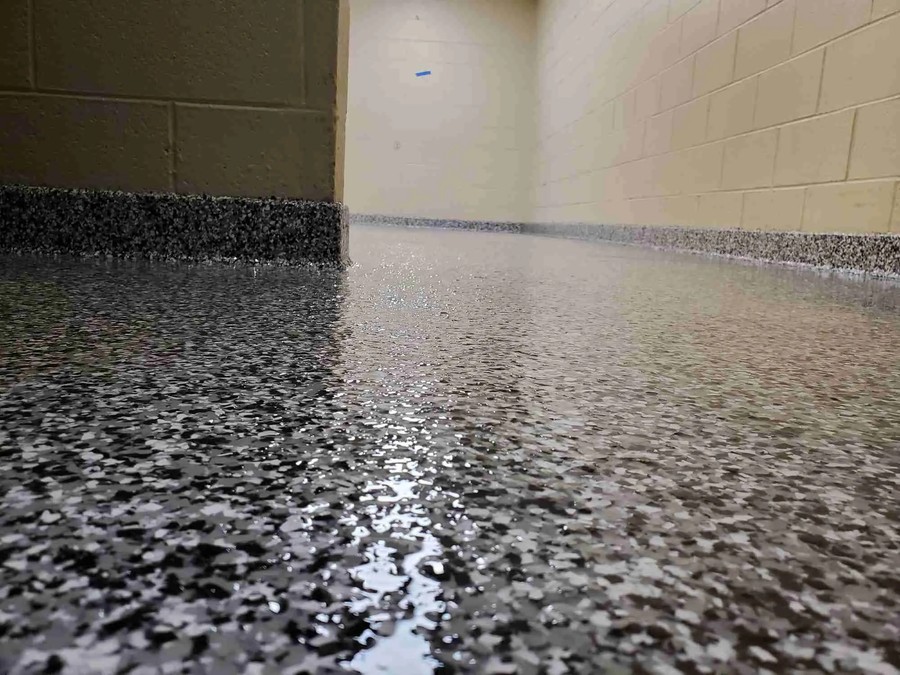
Anti slip and anti skid resin floors are specialist flooring systems designed to provide enhanced grip underfoot. They are made from liquid resin materials—typically epoxy or polyurethane—that are applied to a prepared surface and cured to form a tough, seamless layer. To improve traction, aggregates such as quartz, aluminium oxide or bauxite are broadcast into the surface during installation.
These floors are particularly effective in areas prone to water, oil, or chemical exposure where standard surfaces may become hazardous. The term “anti slip” typically refers to reducing the risk of pedestrian slips, while “anti skid” is more commonly used in areas where vehicle or machinery movement is involved.
Key Benefits
- Improved Safety: Reduces the risk of accidents for both foot and wheeled traffic.
- Durability: Resin floors offer excellent wear and impact resistance.
- Hygienic: Seamless surfaces are easy to clean and resistant to bacterial growth.
- Chemical Resistance: Suitable for industrial environments with chemical exposure.
- Customisable Finish: Levels of slip resistance can be tailored to your needs.
Where Are They Used?
Anti slip and anti skid resin flooring is used across a range of sectors:
- Food and Beverage Processing: To prevent slips caused by liquid spills or grease.
- Warehouses and Logistics Centres: Where forklifts and pallet trucks operate.
- Commercial Kitchens: Wet and greasy conditions require maximum traction.
- Car Parks and Ramps: To prevent skidding in wet weather.
- Public Transport Terminals: High footfall and weather exposure demand safe surfaces.
- Pharmaceutical and Cleanroom Facilities: Where both hygiene and safety are critical.
Types of Resin Systems
- Epoxy Resin
Known for its strength and chemical resistance, epoxy is a popular choice for industrial settings. It offers a wide range of finishes, including highly textured surfaces for maximum grip. - Polyurethane Resin
More flexible than epoxy, polyurethane systems perform better under thermal stress, making them ideal for kitchens and environments with extreme temperature changes. - Methyl Methacrylate (MMA)
Fast curing even in cold conditions, MMA resin is suitable for areas where downtime must be kept to a minimum. Anti slip properties can still be incorporated despite the rapid cure time.
Choosing the Right Level of Slip Resistance
Not all areas require the same level of slip resistance. For example, a wet processing area in a fish factory will need a much coarser surface than a dry warehouse. The slip resistance is usually measured using the Pendulum Test Value (PTV). The higher the PTV, the lower the slip risk.
- PTV 0–24: High slip potential
- PTV 25–35: Moderate slip potential
- PTV 36+: Low slip potential (recommended minimum for most environments)
Working with a professional resin flooring contractor will help ensure you choose the right level of grip for your operational and safety requirements.
Installation Considerations
Installing anti slip resin floors is a specialist task and should be handled by trained professionals. Key considerations include:
- Surface Preparation: Proper cleaning and mechanical preparation is essential for adhesion.
- Environmental Conditions: Temperature and humidity affect curing and finish.
- Downtime: Some systems require longer curing times—plan accordingly.
- Maintenance: Though highly durable, all floors need regular cleaning to maintain slip resistance.
Maintenance Tips
Even the best anti slip floor will lose effectiveness if not properly maintained. Here are some basic tips:
- Use appropriate cleaning agents to remove oils and residues.
- Avoid polishing the surface as this can reduce grip.
- Periodically test slip resistance and reapply texture if needed.
Final Thoughts
Anti slip and anti skid resin floors are more than just a safety upgrade—they are a proactive investment in protecting your workforce, meeting legal obligations and maintaining operational efficiency. Whether you run a food processing plant, a public facility or a heavy duty warehouse, there is a resin flooring solution designed to meet your needs.
To find the right anti slip resin system for your site, speak to an experienced resin flooring specialist who can assess your environment and recommend a tailored solution.
