

If you own a log home, you already know it doesn’t behave like brick, vinyl, or fiber cement. Wood expands, contracts, checks, and breathes, and every season adds a new layer of stress to your exterior finish.
That’s why comparing log home maintenance companies isn’t the same as comparing general painters or exterior contractors. The right partner understands wood science, moisture dynamics, product compatibility, and how to stop small issues from turning into structural repairs.
In this guide, you’ll learn what truly separates a log home specialist from a typical exterior crew, what “good maintenance” actually looks like, and how Pencil Log Pros approaches long-term protection through inspections, repairs, staining, sealing, and proactive planning.
Whether your home is newly built or decades old, the goal is the same: keep the logs healthy, keep water out, keep UV from stripping protection, and keep maintenance predictable instead of reactive.
Why Log Homes Demand a Different Maintenance Standard
A log home is a living envelope. Even when the structure is stable, the surface conditions constantly change with temperature swings, sun exposure, wind, precipitation, and humidity.
Wood movement is normal, but movement plus moisture is where trouble starts. Checks open, seams flex, and vulnerable areas like log ends and corners can soak up water if they aren’t protected properly.
UV exposure is another constant battle. Sun slowly breaks down coatings, causing fading, chalking, and loss of water repellency, especially on the most exposed faces of the home.
Then there’s the “quiet” damage: tiny gaps around windows, doors, and penetrations that let water creep behind stain or chinking. This is where maintenance becomes less about looks and more about risk management.
When you talk to log home maintenance companies, ask whether their process is built around prevention. If the plan starts and ends with “we’ll coat it,” you’re likely buying a short-term cosmetic reset.
The Most Common Threats to Log Homes (No Matter Where You Live)
Every location has its own mix of challenges, but the same core threats show up again and again. The best maintenance plan doesn’t guess; it targets these threats with specific tools and materials.
Moisture Intrusion
Moisture is the main driver behind rot, staining, finish failure, and interior comfort issues. Water typically enters at log ends, horizontal ledges, gaps around trim, deck connections, and any place sealants have failed.
Stopping moisture requires inspection and detail work, not just new stain. A log home specialist looks for entry points and fixes the cause, not only the symptom.
UV Breakdown
Even a high-quality finish eventually loses its protective properties. When UV wins, you see fading, dry-looking logs, and patchy surfaces that don’t repel water the way they used to.
Proactive maintenance keeps you ahead of this cycle, so you’re refreshing protection before the wood itself begins to degrade.
Freeze-Thaw Stress
In climates with cold seasons, water that gets into checks and seams can expand as it freezes. Over time, that cycle can widen cracks, worsen separations, and accelerate finish failure.
This is why sealing checks and key transition points is a core maintenance step, not an optional upgrade.
Biological Growth
Mildew, algae, and other growth can discolor logs and weaken the integrity of coatings. The fix isn’t just “pressure wash it hard”; the right cleaning approach preserves wood fibers while removing contamination.
Proper prep sets the stage for a finish that actually bonds and lasts.
Insects and Wildlife
Carpenter bees, wasps, and woodpeckers often target exposed or weathered areas. These problems commonly correlate with finish breakdown and moisture, so the best defense is a well-protected exterior.
Maintenance closes the loop between appearance and durability.
What “Good Maintenance” Actually Means for a Log Home
Log home maintenance is not a single task. It’s a sequence that starts with inspection, continues through targeted repairs, and ends with the right protective system applied under the right conditions.
When homeowners feel disappointed by past work, it’s usually because one or more of these steps were skipped. The result is a finish that looks decent at first, but fails early or hides problems underneath.
A strong maintenance plan should be repeatable. It should also be transparent, with clear explanations about what was found, what was fixed, and what needs to be watched over time.
This is where the difference between log home maintenance companies becomes obvious. Some offer “paint-like” solutions, while others operate like caretakers of a wood structure.
How to Evaluate Log Home Maintenance Companies (Without Getting Overwhelmed)
Many contractors will say they “do log homes.” Fewer can explain why certain products fail on logs, how to manage wood movement, or what details prevent rot at the most vulnerable points.
Use this section as a filter. The goal is to quickly identify whether you’re talking to a true craft-focused team or a crew applying a generic exterior playbook.
1) Do They Talk About Moisture First?
Listen for questions about drainage, splash-back, rooflines, gutters, log ends, decks, and prior leak history. If the conversation stays only on color and sheen, you’re not getting a durability-focused plan.
A log home specialist treats moisture as the design constraint that drives every decision.
2) Do They Explain Prep in Detail?
Prep is where longevity is won or lost. A quality crew should explain how they’ll clean, what they’ll do about mildew or failing coatings, and how they’ll preserve wood fibers while restoring a healthy surface for adhesion.
If prep is described as a quick wash and immediate coating, expect shorter life from the finished work.
3) Do They Address Compatibility Between Stain, Sealants, and Chinking?
Log homes are systems. The stain, sealants, and chinking need to work together, or you’ll get early cracking, peeling, and separation in the most critical areas.
This is a common failure point when log home maintenance companies treat logs like standard siding.
4) Do They Provide a Plan, Not Just a Price?
The best teams give you a roadmap. That includes priorities, an honest assessment of what’s urgent, and how maintenance can be staged to protect your home without unnecessary work.
Clear planning is often the biggest difference between “a job” and a long-term relationship with your home.
When You Need a Log Home Specialist (Not a General Exterior Contractor)
Some log home issues are obvious, like visible rot or wide gaps. Others are subtle, like discoloration around a check that signals water movement behind the finish.
If you notice any of the signs below, it’s time to consult a log home specialist who can diagnose causes and recommend repairs that last.
- Fading, chalky, or “dry” looking logs on the most sun-exposed sides.
- Dark staining under checks or near log ends, especially after rain or snow melt.
- Soft or spongy wood at corners, around windows and doors, or near deck connections.
- Cracked, missing, or separating chinking along seams.
- Caulk pulling away where trim meets logs or around penetrations.
- Recurring insect activity in the same areas year after year.
- Persistent musty odor or interior humidity that doesn’t match your HVAC settings.
- Peeling or flaking finish that exposes bare wood or uneven layers.
These aren’t just aesthetic problems. They’re early-warning indicators that your protective system may be failing in specific places.
A proactive approach protects the structure and can reduce the scope of future restoration work.
The Pencil Log Pros Maintenance Philosophy
Pencil Log Pros exists for one reason: to care for log homes the way log homes need to be cared for. That means treating the exterior as a working wood system, not a decorative surface.
Instead of chasing quick fixes, we focus on repeatable processes, compatible materials, and detail-driven workmanship. The goal is to help homeowners avoid the “big surprise” years where rot repair suddenly becomes unavoidable.
Homeowners often search for log home maintenance companies when the finish looks tired. We prefer to catch issues before that point, when small repairs and targeted protection can deliver the best value.
Our Step-by-Step Log Home Maintenance Process
Every home is different, but the fundamentals stay consistent. Below is the structured approach Pencil Log Pros uses to keep maintenance predictable and results durable.
Step 1: Full Exterior Inspection and Risk Mapping
We start by identifying high-risk zones. That includes log ends, corners, window and door transitions, deck intersections, roofline runoff areas, and places where prior materials may be failing.
We also look for patterns. A repeated stain failure on one face of the home often points to UV stress, while recurring dark discoloration may indicate moisture pathways that need to be addressed.
This inspection phase is where a log home specialist creates clarity. The goal is to know what’s happening before any coating is applied.
Step 2: Cleaning That Preserves Wood Fibers
Cleaning is essential, but aggressive methods can damage the surface, raise grain excessively, and reduce coating performance. Proper cleaning removes contaminants while keeping the wood healthy and ready for the next layer of protection.
When biological growth is present, it’s treated appropriately so you’re not trapping problems under a new finish.
Step 3: Prep That Fixes the “Why” Behind Finish Failure
Prep may include addressing failing coatings, smoothing rough areas, and ensuring the surface can accept stain uniformly. Skipping this step leads to patchy absorption and reduced longevity.
Many log home maintenance companies spend most of their time coating because it’s visible. We spend the time where it matters: on what makes the coating perform.
Step 4: Targeted Repairs Before Any Stain Goes On
Maintenance is the perfect time to correct small issues. That can include spot rot repair, replacing compromised wood, sealing vulnerable checks, and repairing chinking or sealant transitions.
This sequencing matters. If you stain first and repair later, you often reduce adhesion at the exact points that need it most.
Step 5: Staining and Sealing With a System Approach
A durable finish is chosen and applied based on exposure and condition, not only color preference. The objective is consistent protection, appropriate coverage, and a finish that works with the home’s movement.
We also pay close attention to drying windows and weather timing. A technically correct product can still fail if it’s applied under poor conditions.
Step 6: Detail Work at Transitions and Penetrations
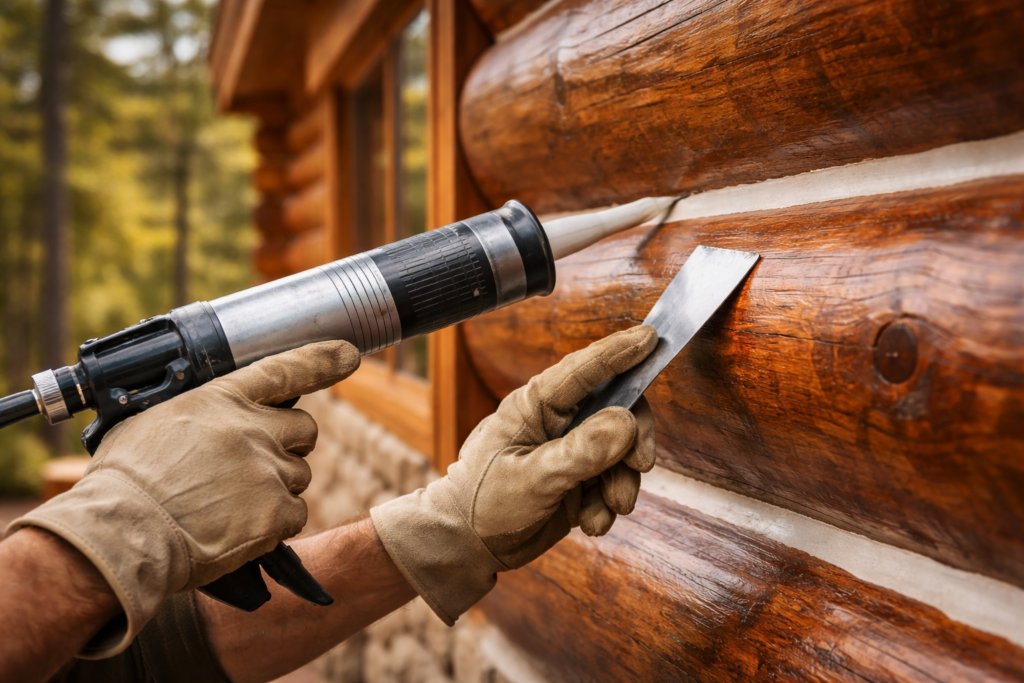
Many log homes fail at the details: trim-to-log joints, corners, window/door edges, light fixtures, vents, hose bibs, and fastener penetrations. These spots often need compatible sealants and careful craftsmanship.
A log home specialist treats these points as essential, because that’s where water gets in first.
Step 7: Final Walkthrough and Maintenance Roadmap
We finish with a review of what was addressed and what should be monitored. The best outcome is not just a great-looking home today, but a clear plan for keeping it that way.
Maintenance is most effective when it’s scheduled thoughtfully, rather than triggered by visible failure.
Common Log Home Problems We Address During Maintenance
Even well-cared-for log homes develop areas that need attention. The advantage of proactive maintenance is that most issues can be handled early, when repairs are smaller and more affordable.
Finish Wear and Uneven Absorption
Some sections of a log wall receive more sun and weather than others. Over time, you may see one side fading faster, or blotchy absorption where older coatings are inconsistent.
Correct prep and a consistent protective strategy bring the surface back into balance.
Checking That Becomes a Water Pathway
Checks are natural, but they can become problematic if they collect water or open into vulnerable areas. Sealing strategies and careful inspection can reduce water retention and protect the wood below.
This is one of the most overlooked tasks when homeowners compare log home maintenance companies.
Chinking Separation and Cracking
Chinking is designed to flex, but it can fail if it’s aged, improperly applied, or incompatible with surrounding materials. Maintenance is the ideal time for targeted repairs that restore the seal where it matters most.
Fixing chinking the right way helps keep air and water out while preserving the home’s appearance.
Rot in High-Risk Zones
Rot often starts at corners, log ends, deck interfaces, and below windows. Catching it early can mean localized repairs rather than large structural replacements.
A log home specialist looks for the moisture source that caused the rot, so you don’t repeat the same repair later.
Deck and Railing Wear That Impacts the Home
Decks don’t just affect curb appeal. They can also funnel moisture toward the home, especially where the deck meets the log wall.
Deck refinishing and proper sealing can reduce splash-back, improve drainage behavior, and extend the life of nearby logs.
Services Pencil Log Pros Provides for Long-Term Log Home Care
Maintenance is most effective when one team can handle the full system: logs, seams, transitions, repairs, and protective finishes. Pencil Log Pros offers services designed specifically for log homes, not adapted from standard exterior work.
- Log home staining and re-coating to restore protection, improve water repellency, and keep the exterior looking consistent.
- Chinking repair and replacement to maintain a flexible, sealed building envelope.
- Rot repair and wood replacement in compromised areas, with attention to the underlying cause.
- Caulking and detail sealing at trim transitions, penetrations, and other moisture entry points.
- Surface prep and cleaning tailored to log surfaces to support adhesion and longevity.
- Deck refinishing to protect horizontal surfaces and reduce moisture stress near the home.
- Preventative inspection planning to keep small concerns from becoming major repairs.
If you’re searching for a log home specialist, look for a team that treats these services as connected, not separate line items.
Maintenance Programs: The Smartest Way to Protect a Log Home
One-off projects can improve appearance, but a programmatic approach protects performance. The biggest advantage of a maintenance program is that it replaces surprise repairs with a predictable schedule.
Instead of waiting until the finish looks clearly worn, the home is inspected and refreshed on a cadence that matches real conditions. That often means fewer emergency fixes, fewer large-scale restorations, and a longer life for your protective system.
For homeowners comparing log home maintenance companies, this is a major differentiator. Not every contractor builds long-term plans, because long-term plans require consistent standards and consistent follow-through.
Why Maintenance Programs Save Money Over Time
When coatings fail completely, prep becomes more intense and repairs tend to grow. When maintenance is done earlier, refresh cycles are simpler and damage is often limited to small areas.
Think of it like preserving a roof. You don’t wait for active leaks before you inspect and address the vulnerable points.
What a Good Program Typically Includes
While the exact scope depends on your home, most strong programs include periodic inspections, targeted touch-ups, sealing at vulnerable details, and refresh coats when protection begins to fade.
A log home specialist will also help you prioritize upgrades that reduce future risk, such as improving water management at problem areas.
Example Project Scenarios (What Maintenance Looks Like in the Real World)
Every log home has its own story. The examples below illustrate how maintenance protects both appearance and structure without turning every visit into a major renovation.
Scenario 1: Sun-Exposed Wall Fading and Dry Wood
A homeowner notices the most exposed side of the home looks lighter and drier than the rest. There’s no visible rot, but water doesn’t bead on the surface anymore.
The solution often includes careful cleaning, prep to create consistent absorption, targeted check sealing where water can sit, and a protective re-coat designed to restore UV and moisture resistance.
This is a classic case where a log home specialist protects the wood before deterioration starts.
Scenario 2: Chinking Cracks at Seams and Corners
The home looks mostly fine from a distance, but up close the chinking shows separation where logs meet and at corners. Drafts are noticeable during windy weather.
Targeted repairs restore the seal, and detail sealing at transitions helps prevent moisture intrusion. Maintenance keeps the building envelope tight and helps coatings last longer along the seam lines.
Not all log home maintenance companies handle chinking correctly, so it’s an important place to verify experience.
Scenario 3: Early Rot Near a Deck Connection
A small soft spot appears where the deck meets the home. The area is shaded, and splash-back from rain or snow melt regularly hits the lower logs.
A good maintenance response includes addressing drainage and splash behavior, repairing the compromised wood, sealing vulnerable edges, and refinishing nearby horizontal surfaces if they’re contributing to the issue.
The goal is to stop the cycle that caused the damage, not just replace wood and hope for the best.
Homeowner Maintenance Tips That Make Professional Work Last Longer
Professional maintenance is the foundation, but smart homeowner habits extend the life of the finish and reduce the risk of hidden damage. These tips are simple, but they make a measurable difference.
Do a Seasonal Walkaround
Once each season, walk the perimeter and look for changes. Pay attention to dark staining, failed caulk, widening gaps, and any place water seems to linger.
Taking quick photos helps you compare conditions over time.
Manage Water at the Source
Ensure runoff is directed away from the structure. Splash-back is a frequent culprit on lower logs, especially where grade or hard surfaces bounce water toward the home.
If you see recurring wet zones, treat it as a priority even if the finish still looks okay.
Keep Vegetation Off the Logs
Plants and stacked materials trap moisture and reduce airflow. Keeping space between landscaping and the log wall supports faster drying and fewer mildew issues.
Dry wood lasts longer, plain and simple.
Watch Log Ends and Horizontal Ledges
Log ends and ledges tend to absorb water more readily than flat faces. If these areas look darker after storms or stay damp longer, bring it up during your next inspection.
A log home specialist will know how to protect these spots without creating new problems.
Don’t Over-Wash the Exterior
Frequent aggressive washing can wear down protective coatings. If you need to clean, use methods that remove grime without damaging the finish or raising wood fibers unnecessarily.
If you’re unsure, ask for guidance before trying new chemicals or high pressure.
Questions to Ask Before Hiring Log Home Maintenance Companies
The right questions reveal whether a contractor understands log homes or simply works on them occasionally. Use these prompts when gathering quotes or comparing approaches.
- How do you identify and address moisture entry points before staining?
- What is your prep process, and how do you prevent fiber damage during cleaning?
- How do you ensure stain, sealants, and chinking are compatible as a system?
- How do you handle checks, log ends, and other high-absorption areas?
- What does your process include around windows, doors, and penetrations?
- How do you decide between targeted chinking repairs versus broader replacement?
- Do you provide a maintenance roadmap so I know what to expect next year?
If the answers are vague, or if the contractor can’t explain the “why” behind their products and steps, keep looking. A true log home specialist should be comfortable talking details.
Why Pencil Log Pros Is Different
Many homeowners start their search thinking they just need a fresh coat. Then they discover that a log home needs craftsmanship, problem-solving, and a process designed for wood movement and moisture control.
Pencil Log Pros focuses on that reality. We approach each home with the mindset of protecting an asset, not simply finishing a surface.
We Treat the Home as a System
Logs, stain, sealants, and chinking all work together. When one part fails, the others are stressed, so our work is designed to keep the full system performing.
This is a key difference you’ll notice when comparing log home maintenance companies.
We Prioritize Details That Prevent Rot
Rot typically begins at predictable locations, and those locations can often be protected with the right prep, sealing strategy, and ongoing inspection. The goal is to keep repairs small and localized, not recurring and expanding.
That prevention mindset is at the heart of what it means to hire a log home specialist.
We Build a Long-Term Plan
Maintenance works best when it’s planned. We help homeowners understand what’s urgent, what can be staged, and what should be monitored so the home stays protected year after year.
That clarity makes ownership easier and helps keep costs predictable.
What to Expect After Maintenance Is Complete
When the work is done, the home should look more consistent and feel more protected. Water should behave differently on the surface, and vulnerable points should be sealed and stabilized.
But the biggest win is what you don’t see: reduced moisture pathways, fewer early failure points, and a roadmap for ongoing care.
Most log homes benefit from periodic inspections and selective touch-ups rather than waiting for full-coat failure. That’s how you extend finish life and reduce the frequency of large restoration cycles.
Protect Your Log Home With a Plan That Matches Real Ownership
Log homes reward proactive care. When you work with the right team, maintenance becomes a predictable rhythm instead of an emergency response to rot, staining, or major finish failure.
If you’re comparing log home maintenance companies, choose a partner who can explain the system, diagnose moisture risks, and perform the detailed work that keeps logs healthy. If you want guidance from a true log home specialist, Pencil Log Pros is here to help you protect what makes your home unique.
FAQ: Hiring a Log Home Specialist and Choosing the Right Maintenance Team
How often should I hire log home maintenance companies to inspect my exterior?
Most log homes benefit from periodic inspections because small failures can become big repairs if they go unnoticed. The right cadence depends on exposure, finish condition, and how your home handles moisture, but consistent check-ins are almost always cheaper than reactive restoration.
What should log home maintenance companies include in a real maintenance visit?
A strong visit typically includes inspection, targeted prep, repairs at vulnerable areas, and protective finishing where needed. The most important part is addressing moisture pathways and transition points instead of only refreshing the visible face of the logs.
When do I need a log home specialist instead of a general painter?
You need a log home specialist when the home has chinking issues, suspected rot, recurring staining, or finish failure that keeps returning in the same places. A specialist understands compatibility between products and how to protect wood movement zones without creating new problems.
Can a log home specialist fix a few bad areas without redoing the whole exterior?
Often, yes. A log home specialist can target repairs, address localized moisture entry points, and create a staged plan that restores protection over time, especially when the rest of the finish is still performing.
Why does my stain keep fading faster on certain parts of the house?
Uneven fading is typically driven by exposure differences, especially sun and weather intensity. Maintenance should focus on restoring protection on high-exposure faces while ensuring prep and product selection support consistent performance across the home.
Is chinking repair part of normal maintenance?
It can be. Many homes need periodic chinking touch-ups where separation begins, because seams and corners are high-movement areas that also carry a lot of moisture risk.
How do I know if dark staining means rot?
Dark staining can have multiple causes, including moisture movement, tannin bleed, mildew, or finish failure. The safest approach is an on-site evaluation so the cause is identified and the fix matches the problem rather than covering it up.
What’s the biggest mistake homeowners make when choosing log home maintenance companies?
The biggest mistake is choosing based on a “coat-only” scope without confirming prep, detail sealing, and system compatibility. The best results usually come from teams who build a plan around prevention, inspection, and targeted repairs, not only a fresh finish.
