
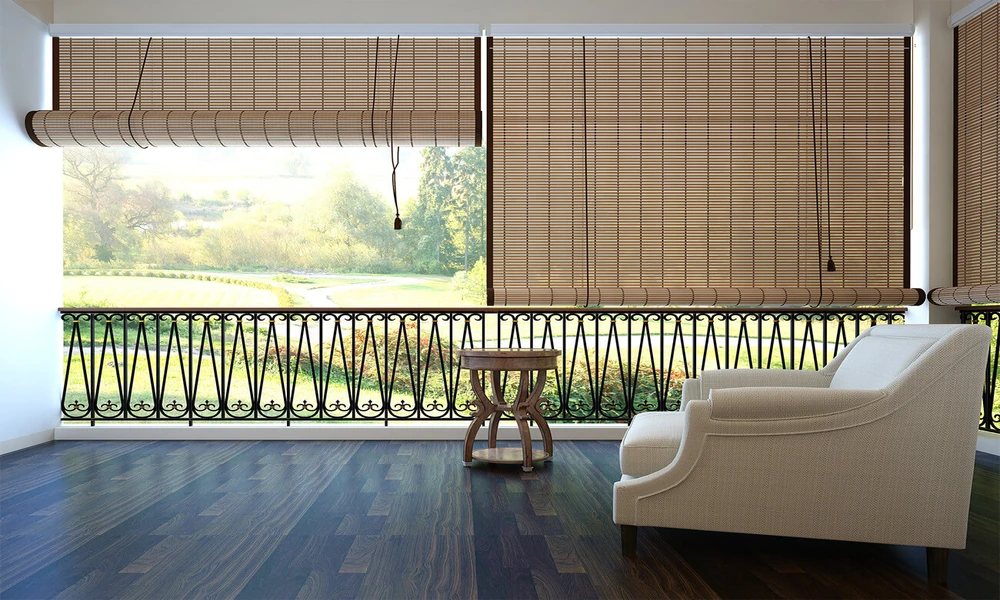
Blinds for balcony spaces address a practical challenge that is particularly relevant in Singapore’s high-density residential environment: the need for privacy, sun protection, and weather management in an outdoor space that is simultaneously open to the elements and overlooked by neighbouring properties. The right balcony blind transforms a space that is too hot to use comfortably in the afternoon into a usable living area for most of the day.
The Balcony Challenge in Singapore
Singapore’s climate creates a specific set of demands for balcony window treatments that temperate-climate products do not always address. Direct equatorial sun on a west or south-facing balcony in the afternoon produces surface temperatures that make the space uncomfortable and unusable without protection. The UV index in Singapore regularly reaches 11 or above, which is extreme on the World Health Organisation’s scale and causes meaningful UV damage to both people and materials.
The balcony is also exposed to Singapore’s frequent and often heavy rain. Any balcony blind or shade system must be designed to handle this exposure without degrading quickly, retaining its structural integrity and appearance through years of wet-dry cycling.
Finally, in Singapore’s condominium and HDB environment, balconies often face directly toward neighbouring units at close distances. Privacy management for balcony spaces is a genuine concern for many residents, not merely an aesthetic one.
Types of Balcony Blinds
Blinds for balcony spaces in Singapore come in several formats, each suited to different balcony configurations and user priorities.
Zip-track roller blinds use a guide track system on each side of the blind that prevents wind-induced billowing and keeps the fabric under tension in all weather conditions. This system is the most effective option for balconies exposed to wind and rain, and is widely used on Singapore condominiums for its clean appearance and reliable weather performance.
External roller blinds without tracks are suitable for sheltered balconies where wind exposure is minimal. They provide effective sun and glare management and can be specified in blockout or sunscreen fabrics depending on whether full light exclusion or a degree of view-through is preferred.
Louvred or slatted systems provide sun shading while allowing air movement through the louvre gaps, which is beneficial in Singapore’s warm climate where ventilation remains important even when the sun is intense.
Drop arm awnings project outward from the wall and provide shade over a horizontal area rather than a vertical screen, which suits balconies where the sun angle means shading from above is more effective than from the front.
Fabric and Material Selection
Balcony blind fabrics must be specified for outdoor use, not interior applications. Interior fabrics, even those described as “water-resistant,” are not designed for sustained outdoor UV exposure and will degrade visibly within one to two years in Singapore’s conditions.
Outdoor-grade fabrics for balcony sun protection blinds in Singapore are typically woven from UV-stabilised PVC-coated polyester yarns that resist UV degradation, retain their colour, and can be cleaned without damage. These fabrics are rated for outdoor exposure by their openness factor: a lower openness factor provides more sun and privacy protection, while a higher openness factor allows more light and view-through while still reducing glare.
As Singapore’s Building and Construction Authority notes in its guidelines on balcony installations, “Materials used in external additions must be suited to Singapore’s tropical climate conditions.” This specifically means UV and moisture resistance appropriate to continuous outdoor exposure.
Privacy Without Losing the View
One of the most useful properties of modern sunscreen fabrics for balcony blinds is that they can provide meaningful privacy from external view while maintaining a degree of view-through from inside. The mechanism is optical: the fabric’s open weave makes it more difficult to see through from outside in bright exterior light while allowing the occupant inside, in a darker interior environment, to see outward through the same fabric.
This means that outdoor balcony blinds in Singapore can achieve privacy from neighbouring units without requiring fully opaque fabric that eliminates the view and reduces natural light.
Installation and Compliance
In Singapore’s condominium developments, balcony modifications typically require approval from the management corporation before installation. Freestanding or non-permanent installations may be treated differently from fixed structural additions. Confirming the applicable requirements for your development before commissioning installation is an important practical step. Blinds for balcony spaces that are properly specified, installed, and approved deliver the combination of privacy, sun protection, and extended usability that makes Singapore’s outdoor living spaces genuinely enjoyable.
