
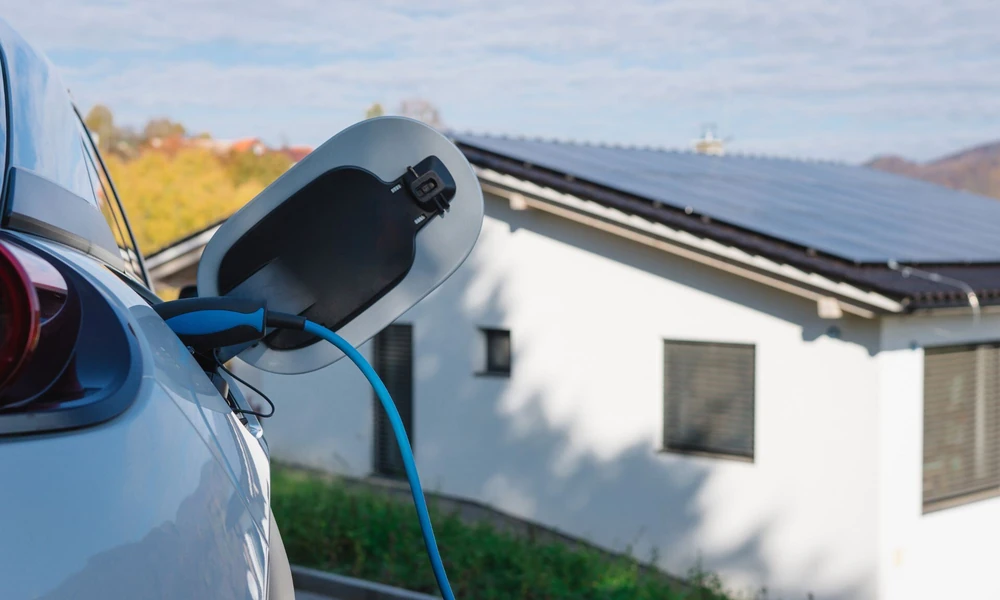
Electric vehicle chargers, rooftop solar, and backup batteries are among the most common electrical upgrades homeowners ask about today. All three put new demands on a home’s wiring, and many houses were not designed with them in mind. Knowing how your electrical system works, and what each upgrade requires, helps you plan the work, avoid surprise costs, and ask better questions of the professionals you hire.
This guide is general information. Requirements vary by utility, city, and home, so confirm the details for your property with a licensed professional.
Start With Capacity: What Your Home Can Actually Supply
Every home has a service size, measured in amps, that limits how much power can flow in at one time. Many older homes have 100 amp service, and many newer ones have 150 or 200 amps. Your main panel then divides that supply among individual circuits, each protected by a breaker.
What matters for any upgrade is the unused capacity left after your existing loads are counted. Central air conditioning, electric ranges, dryers, water heaters, and hot tubs consume much of it. A new addition has to fit into whatever remains, or the service has to be enlarged.
Upgrade One: Electric Vehicle Charging
Charging levels. Level 1 charging uses a standard household outlet and adds only a few miles of range per hour. Level 2 charging uses a dedicated 240 volt circuit and is the usual choice for home use, since it can typically refill a battery overnight.
What a Level 2 charger requires:
- A dedicated circuit with a breaker sized for the charger’s rated output
- Wire of the correct gauge, which depends on the current and the distance from the panel
- An open space in the panel, or a way to free one
- Enough spare service capacity to run the charger alongside your other loads
Why it matters: Chargers run for hours at a time, and electrical rules treat long-running loads as more demanding than short ones. If the load calculation shows your service is tight, a load management device can limit the charger when other large appliances are running, which sometimes avoids a costly service upgrade.
The U.S. Department of Energy’s Alternative Fuels Data Center explains home charging for electric vehicles, including charging levels and equipment considerations, and is a good starting reference.
Upgrade Two: Rooftop Solar
Solar produces power instead of consuming it, but connecting a generation source to a home is more complex than adding a load.
What affects whether your home can accept solar:
- Panel rating. Electrical rules limit how much generation can be connected to a given panel. In some cases the panel must be upgraded, or the system connected in a different way.
- Condition of existing equipment. The panel, grounding, and wiring should be in good shape before anything is tied in.
- Roof condition. If the roof will need replacement within a few years, it is usually cheaper to do it before the panels go up than to remove and reinstall them later.
- Safety equipment. Systems require disconnects and labeling that emergency responders can find quickly.
Approvals. Solar generally requires a permit, an inspection, and approval from your utility before it can be switched on. Utility policies on crediting exported power change over time, so ask any installer to explain the current rules for your utility in writing before you judge the savings.
Upgrade Three: Battery Storage
A battery stores energy, from solar or the grid, and supplies it when the grid goes down or when electricity is most expensive.
Key planning decisions:
- Which circuits to back up. Most homes do not power everything from a battery. Essential loads such as the refrigerator, lights, internet, and medical equipment are often moved to a separate critical loads subpanel.
- Sizing. Battery capacity is measured in kilowatt hours, and the output in kilowatts. A battery sized for a few essentials is very different from one meant to run the whole house.
- Location. Codes restrict where batteries can be installed, including clearances and, in some cases, limits on indoor and garage placement.
- Integration. The system must switch safely between grid and battery power, and it must not feed power back onto the grid during an outage in a way that endangers utility workers.
Planning the Upgrades Together
If you expect to add more than one of these over the next several years, plan them as a package. Each addition affects the others: a charger raises demand, solar adds generation, and a battery changes when power is used. Doing a single panel upgrade with all three in mind is usually cheaper than making several separate fixes.
Practical ways to leave room for the future include:
- Reserving open breaker spaces
- Installing conduit now where a future circuit will run
- Choosing a panel and subpanel layout that anticipates a battery
- Selecting equipment that can communicate or share load
The Load Calculation
The most important document in any of these projects is the load calculation. It is a structured method that adds up the demand from your existing appliances and any new equipment, applies standard factors for the fact that not everything runs at the same time, and compares the result with your service capacity.
A good load calculation tells you whether your service has room, whether load management would let you avoid an upgrade, and whether an upgrade is truly needed. If a contractor recommends replacing your panel or service, ask to see the calculation behind it.
Permits, Inspections, and Utility Approval
Expect paperwork. Most new circuits, solar systems, and batteries require a permit from your local building department and an inspection before they are energized. Solar and storage systems also typically need utility approval. These steps are there for safety, and a contractor who handles them and gives you a realistic timeline saves you considerable effort.
What Affects Cost
Rather than quote numbers, which vary widely, it helps to know what drives the price:
- The size of the service and panel, and whether either needs upgrading
- The distance from the panel to the charger, battery, or inverter location
- The condition of existing wiring and grounding
- The type and size of equipment chosen
- Permit and utility fees
- Any structural, trenching, or finish work required
Ask for itemized, written estimates so you can compare scopes rather than only totals.
Choosing an Electrician
Because these projects involve your panel and your utility connection, they belong with a licensed professional. If you are looking for local help, you could contact an electrician in Temecula to ask about an evaluation of your panel and service, and what your home could support. Describe your goals as specifically as you can, including the vehicle you drive or plan to buy, what you want to keep running during an outage, and whether solar is likely in your future.
Questions to ask:
- What is the capacity of my service and panel, and how much is unused?
- Can you show me the load calculation behind your recommendation?
- Would load management let me avoid a service upgrade?
- How should I plan so that adding a second or third upgrade later is simple?
- Who handles permits, utility applications, and inspections?
- What warranty covers the equipment and the labor?
Common Mistakes to Avoid
- Buying equipment before checking capacity. A charger or battery is wasted if the home cannot support it without further work.
- Treating each upgrade separately. Piecemeal fixes often cost more than one planned project.
- Skipping permits. Unpermitted work can create insurance, resale, and safety problems.
- Choosing on price alone. Compare what each quote includes, such as materials, labor, permits, and warranty.
- Ignoring the existing panel. An old or damaged panel should be addressed before new equipment is connected.
Key Takeaways
EV chargers, solar, and batteries are all achievable for many homes, but each depends on the same foundation: a sound panel, adequate service capacity, and proper permitting. Start with a load calculation, plan for more than one upgrade, and work with a licensed electrician who can explain the reasoning behind each recommendation. A little planning up front keeps costs predictable and leaves your home ready for whatever you add next.
