
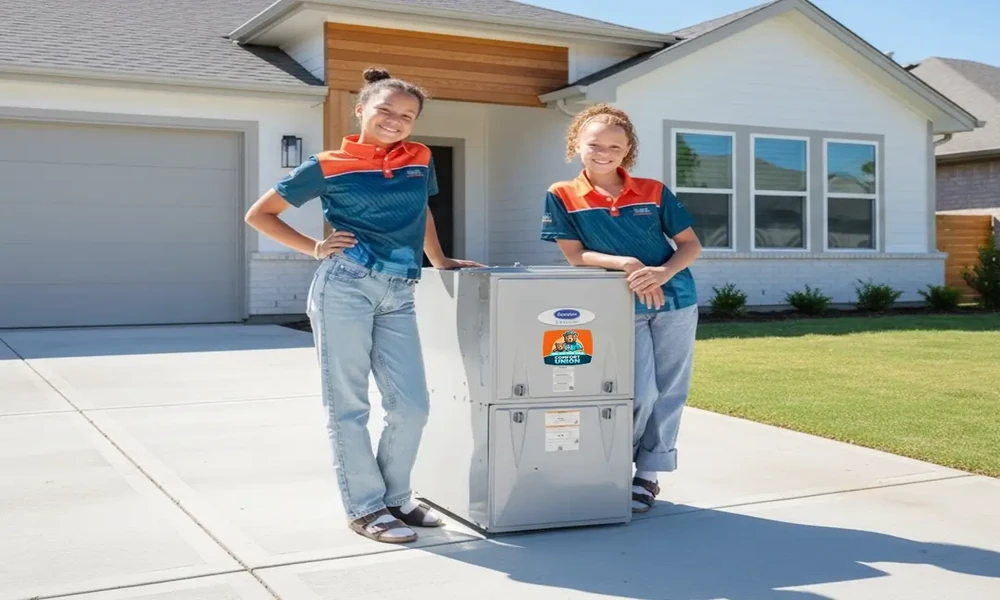
If your house was built between the 1950s and the 1980s, the furnace probably vents up a brick chimney that it shares with the water heater, and it pulls return air through ductwork sized for very different equipment. When that furnace wears out, the replacement will almost certainly be a high-efficiency condensing model, which changes more about the house than most owners expect. None of it is cause for worry, although each change deserves a line on the quote and a conversation before the old unit comes out.
Why the New Furnace Will Be a Condensing One
Under Canada’s federal Energy Efficiency Regulations, a residential gas furnace manufactured on or after July 3, 2019 has to meet a minimum annual fuel utilization efficiency (AFUE) of 95 percent. A few narrow categories carry lower minimums, such as furnaces marked for relocatable buildings or as replacements in manufactured homes, but none of them describe a typical detached Calgary house. In practice, the 80 percent mid-efficiency furnace that used to be the default swap is no longer what you will be offered. A 95 percent furnace pulls so much heat out of its exhaust that the flue gas cools enough to condense, and that single fact drives most of what follows.
Because the exhaust is cool and wet, it cannot go up a masonry chimney the way the old furnace’s hot flue gas did. Instead, it runs through plastic pipe, usually PVC, out the side wall, with a second pipe bringing combustion air in. When you are comparing quotes for installing a new furnace in Calgary, the routing of those two pipes is one of the first things worth asking about, since it decides where the terminations end up and how much drywall or framing is involved.
The Orphaned Water Heater
Once the furnace leaves the chimney, the gas water heater is often left venting into it alone, which installers call an orphaned water heater. The chimney was sized for two appliances, so one small heater may not produce enough warm flue gas to keep a proper draft going. As the gases cool on the way up, moisture condenses on the inside of the brick, which over time can damage mortar and, more importantly, let combustion products spill back into the basement.
There are two common fixes. The first is a chimney liner, a metal pipe run down inside the masonry and sized to the water heater, which gives the smaller flow of gas a passage it can draft through. The second is to replace the water heater with a power-vent or direct-vent model that exhausts through its own plastic pipe, which frees the chimney entirely. The right choice depends on the age of the heater and the condition of the chimney, so it is worth having a high-efficiency furnace installation quoted with this question already answered.
Where the Exhaust Comes Out
The side-wall termination looks simple from outside, but the gas code (CSA B149.1) sets clearances for where it can go. It has to sit a minimum distance above grade and the expected snow level, which matters in Calgary after a heavy spring storm, and it needs set separations from openable windows, doors and the gas meter’s regulator. On older lots with narrow side yards, the nearest legal wall may also face a neighbour’s window, so the direction of the plume matters too.
Picture a 1960s split-level where the furnace room sits on the same side as the meter and a basement window. The shortest pipe run might land in a spot that fails a clearance, so the pipes get routed across the basement ceiling to another wall, which adds material and labour. That is the kind of detail a Calgary furnace installer should catch at the site visit. In winter the exhaust also throws a visible plume and some frost on nearby siding, which is normal, although a termination tucked under a deck can ice up.
The Condensate Drain
A condensing furnace produces mildly acidic water, a steady trickle that grows during a cold snap. It usually runs to a floor drain or, where the drain is too far away, a small condensate pump. In older basements the floor drain is sometimes across the room or under a finished floor, so the route belongs on the quote, and some installers add a neutralizer to protect the cast iron drain pipe common in homes of this era.
The line must stay in heated space, since a frozen condensate line will shut the furnace down on exactly the night you need it. If there is a pump, learn where it is and what it sounds like, because a failed pump is a common reason a newer furnace stops. It is also fair to ask whether the pump has an overflow switch that shuts the furnace off before water reaches the floor, since that small part protects a finished basement.
Return Air in Old Ductwork
Homes from the 1950s through the 1970s often have only one or two return grilles, sometimes with panned joist cavities instead of real ducts. That suited the original furnaces, but a modern unit with a variable-speed blower, especially one with an air conditioning coil on top, may need more return air than the house supplies. When the return is undersized, the blower works harder, the system gets louder at the grilles, and the furnace can overheat and trip its high limit switch, which shows up as short, repeated heating cycles.
A careful installer measures static pressure rather than guessing, and if the return is too small they will suggest another grille or a larger connection at the furnace. A typical installed price for a new furnace in Calgary runs $5,000 to $8,000, and in an older home the liner, the extra venting and any return air work explain much of where a quote lands in that range.
What to Ask Before Signing
Before you sign, ask where the intake and exhaust will terminate, what happens to the water heater venting, where the condensate goes, and whether the return air was measured. Ask too who registers the equipment, since many manufacturers tie a longer parts warranty to registration. Clear answers tell you more about the installer than the brand on the cabinet, and they keep important decisions from being made in a hurry with the old furnace already on the driveway.
Calgary Air Heating and Cooling Ltd Contact Information
Address
95 Beaconsfield Rise NW, Calgary, AB T3K 1X3
Phone
+1 (403) 720-0003
Hours of operation
7 a.m.–11 p.m. (including weekends)
Website
https://calgaryair.ca/furnace-installation-calgary/
Map
