
A Seasonal Pest-Prevention Calendar for Desert HomesKey Takeaways
- Desert pest activity can change after heat, rainfall, and cooler weather.
- Door sweeps, screens, seals, and utility openings deserve regular inspection.
- Reducing clutter, standing water, and outdoor food sources limits hiding places and attractants.
- Early signs, such as trails, droppings, webs, or damaged materials, are easier to investigate than a widespread problem.
- Identification, sanitation, repairs, and carefully selected treatments work best together.
Desert home maintenance changes with the weather. Long dry spells, monsoon moisture, intense heat, and cooler nights can all affect where pests find food, water, and shelter. Building a simple seasonal routine helps homeowners notice small issues before they become disruptive. For homeowners who need treatment guidance in addition to prevention, Green Mango Pest Control is an option for professional pest control services.
The goal is not to make a home completely invisible to every insect or animal. It is to remove easy access to indoor shelter, food, and moisture while keeping the property easier to inspect. A few focused checks each season can make pest prevention a practical part of regular home care.
Table of Contents
- Why Desert Pest Activity Changes With the Seasons
- Winter Pest-Prevention Checklist
- Spring Pest-Prevention Checklist
- Summer Pest-Prevention Checklist
- Fall Pest-Prevention Checklist
- The Main Entry Points to Inspect
- Yard and Landscaping Habits That Help
- How to Use Pest Products Safely
- When to Seek Professional Help
- Common Questions About Desert Pests
Why Desert Pest Activity Changes With the Seasons
Pests respond to conditions around them. During very hot periods, shaded or air-conditioned areas and dependable water sources may become more attractive. Rain can support plant growth, create damp areas around irrigation systems, and bring insect activity closer to homes. Recent reporting on increased pest activity following rain and cooler temperatures in southern Arizona also illustrates why weather changes should prompt a quick exterior inspection.
Cooler fall and winter nights can also make protected voids, garages, attics, and storage spaces more appealing. Seasonal prevention works because it addresses the conditions pests use, rather than waiting for repeated indoor sightings.
Winter Pest-Prevention Checklist
Winter is a useful time to tighten up the building exterior and inspect low-traffic areas.
- Check door sweeps, window screens, and garage-door seals for gaps or damage.
- Seal openings around pipes, wiring, vents, and utility lines with suitable materials.
- Keep pet food in sealed containers and clean up spilled food promptly.
- Remove leaf piles, cardboard, and stored clutter from exterior walls.
- Look in garages, closets, and storage areas for droppings, shed skins, webs, or gnaw marks.
Spring Pest-Prevention Checklist
Spring is a good time to inspect the yard before hotter weather increases water use and outdoor activity. Trim shrubs and branches away from doors, windows, roof edges, and exterior walls. Clean gutters, check irrigation lines for leaks, and look beneath pots, outdoor furniture, and stored items for sheltered pest activity. If ants appear, follow the trail carefully to identify where they are entering rather than treating only the visible insects.
Summer Pest-Prevention Checklist
Summer prevention should focus on moisture management, food storage, and safe outdoor habits. Check patios, sheds, garages, and stacked materials before reaching into dark spaces or moving items.
- Repair dripping faucets and damaged irrigation components.
- Keep trash containers closed and rinse food residue from recyclables when practical.
- Bring pet bowls inside when they are not in use.
- Keep window and door screens in good repair.
- Limit bright exterior lighting near entrances when practical.
- Inspect shaded areas and damp spots after irrigation or rainfall.
Fall Pest-Prevention Checklist
As temperatures moderate, focus on shelter opportunities. Seal cracks around foundations and exterior walls, inspect attic vents and roof edges, and replace worn weather stripping around frequently used doors. Move firewood, boxes, yard waste, and unused materials away from the structure. Pick up fallen fruit, seeds, and other food sources that may attract insects or rodents near the home.
The Main Entry Points to Inspect
Many pest issues begin with a small exterior opening. During a walk-around, pay particular attention to gaps beneath exterior doors, cracked window frames, damaged screens, garage-door edges, plumbing and electrical penetrations, attic vents, roof openings, and cracks in stucco, masonry, or foundation areas.
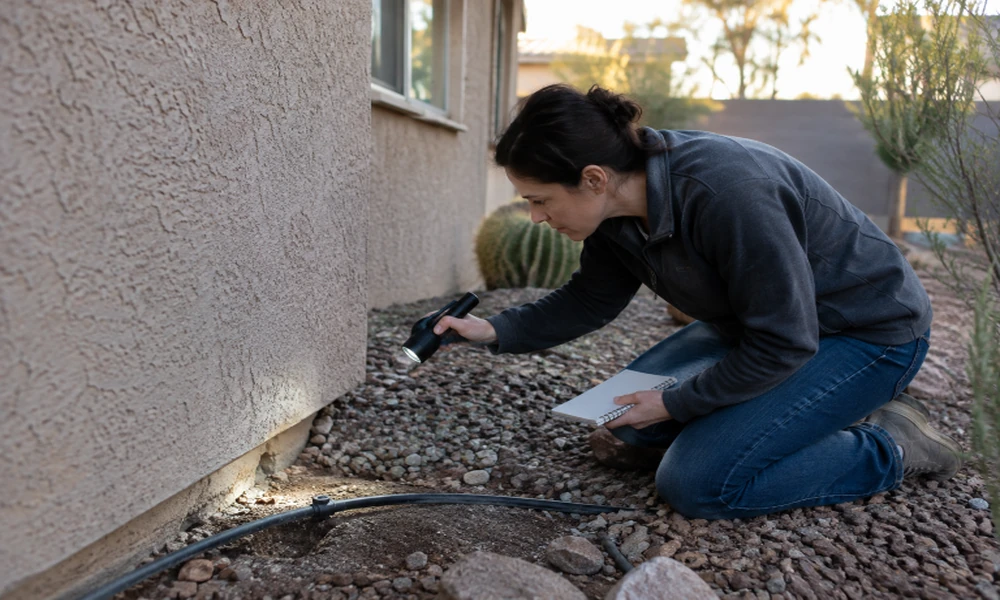
Use a flashlight, gloves, caulk, and a notepad for a simple inspection. Start at the front door, walk the entire perimeter and note repairs by location. Then check the garage, utility areas, and accessible attic spaces. Photographing a gap before repairing it can help track recurring maintenance needs.
Yard and Landscaping Habits That Help
Outdoor conditions influence what happens indoors. Keep vegetation trimmed away from the structure, remove dead plant material and overgrown weeds, and avoid leaving stored materials directly on the ground when possible. Check irrigation zones for wet spots that remain long after watering, especially near walls and foundations.
An integrated approach combines exclusion, sanitation, monitoring, and targeted control when needed. Homeowners seeking identification assistance and prevention information can use the University of Arizona’s home-pest guidance to better understand common household pests and their management options.
How to Use Pest Products Safely
Correct identification should come before choosing any product. Read the entire label, use only the listed application rate and locations, and keep children and pets away from treated areas for the period specified on the label. Never mix products unless the label specifically permits it, and keep products in their original containers.
Start with repairs, cleanup, and removal of food or moisture sources when those steps can solve the problem. Traps and targeted treatments may have a role, but applying products without identifying the pest or entry point can waste time and create unnecessary exposure.
When to Seek Professional Help
Consider professional help when sightings occur repeatedly in multiple rooms, large numbers of insects appear at once, or there are signs of nesting, droppings, strong odors, or damage to wood, insulation, wiring, or stored belongings. Stinging insects near entrances, walkways, or play areas also merit prompt attention.
Before hiring a provider, ask about licensing, the pest being addressed, treatment methods, safety steps, follow-up expectations, and written estimates. Clear answers make it easier to compare services and understand what preparation may be required.
Common Questions About Desert Pests
Are desert homes at risk for pests all year?
Yes. Activity can continue throughout the year, although the pests encountered and the places they seek may change with temperature, rain, and available moisture.
Does a clean home prevent every pest problem?
No. Good sanitation reduces food sources, but pests can still enter through cracks, roof openings, damaged screens, garages, and gaps around plumbing or utilities.
How often should a homeowner inspect the property?
A brief monthly check is useful, along with additional inspections after heavy rain, major landscaping work, or unusual heat.
What should a homeowner do after finding one pest?
Identify it if possible, inspect nearby entry points, remove food and moisture sources, and watch for additional activity before deciding on a treatment.
When is a pest problem an emergency?
Prompt action is appropriate for stinging insects in high-use areas, rodents near food storage areas, suspected termites, or pests that pose a safety risk to household members or pets.
Conclusion
Seasonal pest prevention is a routine home-care task. Checking seals, controlling moisture, maintaining the yard, and watching for early signs each month can help keep small pest concerns from turning into larger household problems.
