
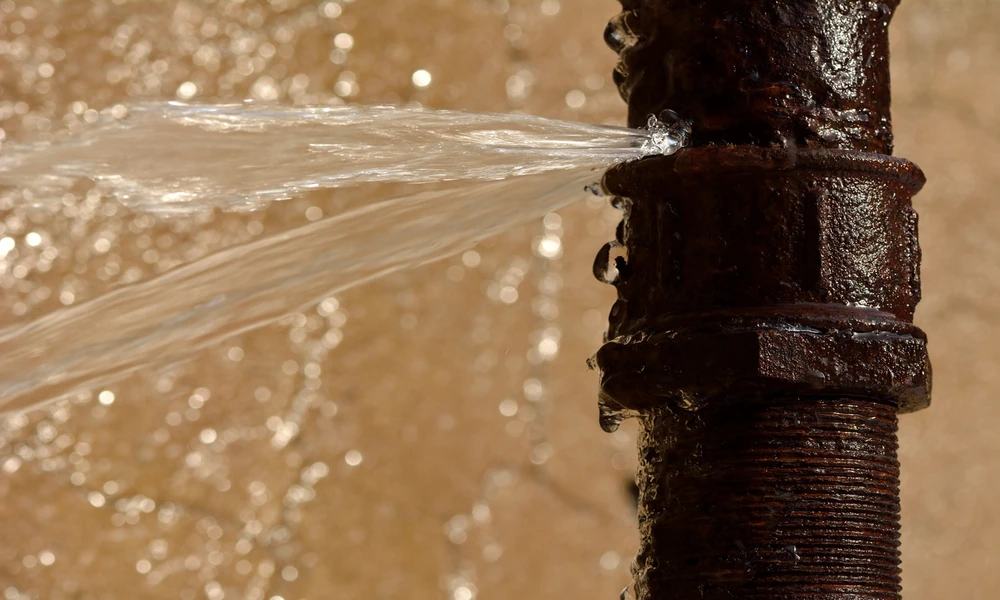
A burst pipe in a Collier County home rarely stays a plumbing problem for long. Most houses from Naples to Immokalee sit on concrete slabs with block walls, supply lines run through drywall and sometimes under the floor, and the local air holds so much moisture that escaped water has little reason to evaporate on its own. A professional response therefore follows a fixed order: stop the water, make the house safe, fix the line, classify what got wet, remove what cannot be saved, then dry and verify with instruments instead of touch.
The order matters because each phase depends on the one before it. Drying equipment set up before the leak is isolated wastes days. Demolition done before anything is photographed can weaken an insurance claim. A wall closed up before readings return to normal traps moisture that surfaces weeks later as swollen baseboards or a closet that smells of mildew.
Homeowners in Naples, Bonita Springs and nearby communities can hand that entire sequence to one crew through Twin Eagles Plumbing & Water Cleanup, a licensed Florida plumbing contractor (CFC 1433066) that takes emergency calls around the clock and covers both halves of a burst pipe: the repair and the water restoration after it. When the failure points to tired supply lines, the same team handles water heater work, drainage systems, hydrojetting and entire home repiping, so the job does not stop at one patched joint.
The Workflow at a Glance
| Phase | Typical window | Main tools | Finished when |
|---|---|---|---|
| Shutoff and safety | First hour | Meter key, breaker panel | Lines hold no pressure, wet circuits are off |
| Repair and pressure test | Hours 1 to 4 | Cutters, fittings, test gauge | Repaired run holds test pressure |
| Assessment and mapping | Hours 2 to 6 | Moisture meters, thermal camera | Every wet zone is mapped and photographed |
| Extraction and removal | Hours 4 to 24 | Extractors, flood cut tools | Standing water and ruined porous material are out |
| Drying and monitoring | Days 2 to 5 | Dehumidifiers, air movers, hygrometer | Readings match an unaffected reference |
Phase One: Stopping the Water and Making the House Safe
- Close the main shutoff, often a valve on an exterior wall near a hose bib. If it is seized, the crew closes the meter valve at the street box with a meter key.
- Cut power to circuits in wet rooms, especially the air handler closet and the garage where the water heater usually sits.
- Turn off the water heater so an electric tank does not burn out its elements without supply.
- Open the lowest faucet to bleed off pressure, then note the meter reading so any hidden second leak shows up as movement.
Phase Two: The Repair
- Find the failure point. A split line in a wall is usually visible, while a slab leak is traced with acoustic equipment and thermal imaging before any tile is broken.
- Cut back to sound pipe. Older copper in Southwest Florida often fails from pinhole corrosion, so the crew checks well beyond the break.
- Pressure test the repaired run before drying begins on a line that might still be weeping.
- Flag repeat failures. Several pinholes on one system usually lead to a repipe conversation, which is permitted work inspected by the local building department.
Phase Three: Classifying the Water and the Damage
Restoration crews work from the ANSI/IICRC S500 standard for professional water damage restoration, which sorts water by contamination (Categories 1 through 3) and jobs by evaporation load (Classes 1 through 4). A broken supply line starts as Category 1, clean water, but water that sits for days in a warm Florida house or soaks through dirty carpet can degrade enough to be handled as Category 2. Class 4 covers materials that hold water tightly, such as concrete block and solid hardwood.
- Take meter readings on drywall, baseboards and cabinet bases in a grid outward from the break.
- Scan with a thermal camera to trace wicking under tile and into neighboring rooms.
- Record a dry reference reading from the same material in an unaffected room. That number becomes the finish line.
- Photograph every wet zone and sketch a moisture map before anything is removed.
Phase Four: Extraction and Controlled Removal
The EPA’s water damage cleanup and mold prevention table frames its guidance around a 24 to 48 hour response window and notes that mold can still develop even when materials dry within that period.
- Extract standing water from tile, carpet and cavities beneath cabinets.
- Pull carpet pad, which rarely dries well enough to keep.
- Make a flood cut, removing drywall a foot or so above the highest wet reading so the cavity can breathe.
- Remove baseboards and cabinet toe kicks so air reaches hidden spaces.
- Bag removed materials and keep samples until the adjuster has seen them.
Phase Five: Drying in a Humid Climate
Opening windows helps in drier regions, but Collier County’s outdoor dew point stays high most of the year, so fresh air usually adds moisture. Crews close the house and control the air instead.
- Size equipment to the class and square footage: low grain refrigerant dehumidifiers, air movers aimed into opened cavities, and the home’s AC holding temperature steady.
- Log temperature, relative humidity, grains per pound and material moisture at each mapped point daily.
- Reposition equipment as zones dry, focusing on block walls and cabinet bases.
- Sign off only when every point matches the dry reference. Most Category 1 jobs get there in three to five days.
The Paper Trail Behind a Florida Claim
The drying log, moisture maps, photos and repair invoice are what an adjuster reviews, so a thorough crew hands them over as a package. Florida’s Homeowner Claims Bill of Rights says an insurer should pay, partially pay or deny a claim within 60 days of filing, and complete records keep that timeline from stalling over questions about what was wet and for how long. Keeping the failed section of pipe adds evidence about the cause.
Seen as a whole, the job is less about speed than sequence. A fast shutoff limits how much water gets in, but the readings taken on day one and matched on the final day are what prove the house is dry. Rebuilding can start with confidence only once the numbers say so.
