
EXCLUSIVE EXPERT CONTRIBUTION / DUBAI, UAE
Expert commentary from SnapFixNow FMC • Engineering-led property maintenance
Moving into a newly completed home should be an exciting transition. Yet a house can pass through handover with attractive finishes while minor technical weaknesses remain undiscovered: a poorly draining AC line, a pump that short-cycles, a bathroom exhaust fan that underperforms or an electrical circuit whose final labelling is incomplete.
The solution is not to treat every new home as defective. It is to spend the first 90 days establishing how the systems perform under real use, while documentation, access and defect-reporting arrangements are still available.
Days 1-10: create a baseline
Start by collecting the completion and handover pack: equipment manuals, warranties, as-built drawings where available, commissioning sheets, circuit schedules, operating instructions and key contractor contacts. Save digital copies in a location the owner and property manager can access.
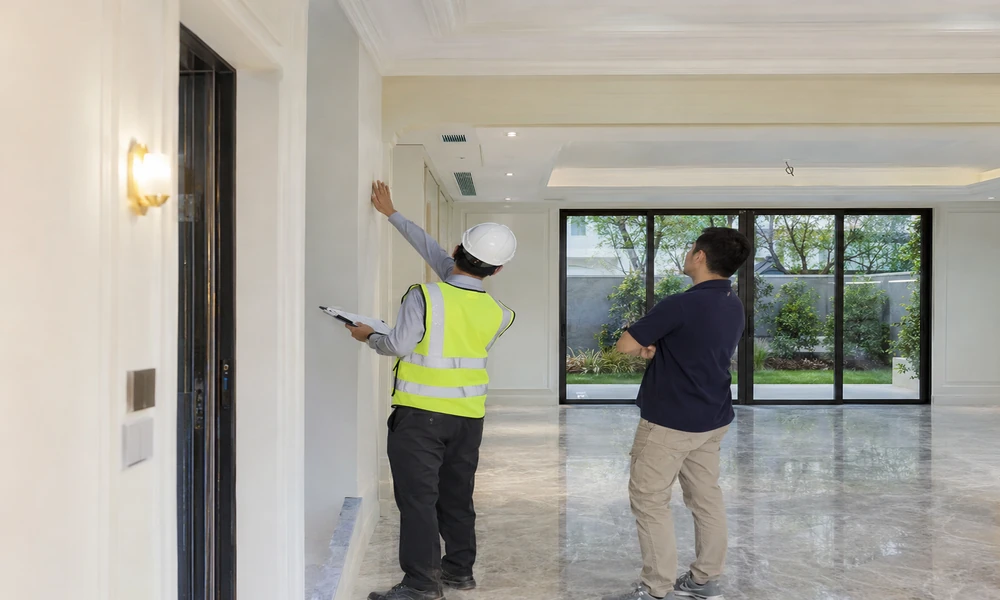
Walk the property room by room and photograph visible condition. Record water pressure at representative outlets, thermostat operation, temperature consistency between rooms, unusual mechanical noises and any stains around service openings. Use a simple log with the location, date, observation and photograph. Do not open electrical panels, remove refrigerant-system covers or undertake specialist tests yourself.
New owners should also confirm that maintenance responsibilities are understood. A manufacturer warranty does not necessarily cover drain cleaning, consumables or faults caused by poor operation. A developer defect-liability process and an ongoing maintenance contract may address different issues.
Days 11-30: test the home in normal use
Some issues become visible only when bathrooms, kitchens and cooling systems run through their ordinary routines. Look for slow drainage during simultaneous fixture use, pressure fluctuation, persistent odours, condensation near AC grilles and doors that begin to rub after changing humidity. Special attention to HVAC inspection and maintenance can help identify drainage, airflow and control issues that only appear under normal occupancy.
For cooling systems, comfort alone is not enough. A room reaching its thermostat setpoint does not prove that the condensate drain, insulation or controls are working correctly. Where symptoms appear, a qualified technician can assess the cause and document relevant performance readings.
Keep an eye on moisture. Water staining, swelling of cabinets and persistent musty smells deserve prompt investigation. A cosmetic patch during the first month can obscure a defect that should have been documented.
Days 31-60: classify and resolve defects
Use three classifications. First, urgent safety or damage risks: live electrical concerns, significant water leaks and uncontrolled overheating. Second, operational defects: inconsistent cooling, recurring breaker trips or malfunctioning pumps. Third, finish and usability defects: doors, sealants or minor surface damage.
For every reported issue, record who is responsible, the date reported, the proposed remedy and the closure evidence. A completed ticket should include more than a contractor’s statement that the job is done. Where relevant, request a test result or demonstration that the fault no longer occurs.
Do not allow a dispute about warranty responsibility to delay urgent protective action where safety or expanding damage is involved. Make the situation safe and preserve evidence while responsibility is being clarified.
Days 61-90: turn the handover file into a maintenance plan
By this stage, the owner should have a small but useful dataset: systems that operate reliably, issues that have recurred and items that require seasonal attention. Use it to set preventive service intervals according to equipment instructions, usage, environmental exposure and qualified engineering advice. An appropriately scoped villa annual maintenance contract can then convert the handover register into scheduled preventive tasks.
In hot-climate homes, cooling, drainage and moisture control deserve particular attention before the highest seasonal loads. Where the home includes VRF systems, multiple indoor units, automation or specialist pumps, make sure the contract specifically lists them rather than assuming a generic “AC service” covers everything.
The best outcome of the first 90 days is not a defect-free checklist. It is an accurate baseline, a resolved priority list and a record that the next service provider can follow. That is how a new home begins to develop a trustworthy maintenance history.
The owner’s 90-day tracking sheet
Create a single log with these fields: date discovered, room or asset ID, symptom, photo reference, severity, who was notified, access provided, test or repair undertaken, reinspection date and closure evidence. Label each issue ‘observed’, ‘reported’, ‘under investigation’, ‘corrected’ or ‘retested’. This is more useful than a gallery of unlabelled WhatsApp photographs. Record meter readings and thermostat settings under ordinary operating conditions, but avoid making technical conclusions from one reading alone.
Three faults that often hide behind a clean handover
First, a condensate drain may seem clear on the inspection day yet leak under longer cooling cycles. Second, a water-pressure problem may appear only when two fixtures are used simultaneously. Third, a wall or ceiling access panel may be neatly finished but fail to provide maintainable access to a valve, drain or fan-coil component. These are examples of performance and access issues, not assertions that all new Dubai villas contain defects. A qualified professional should investigate suspected electrical, refrigerant or pressurised-water faults.
Separate warranty communication from routine servicing
Prepare a handover responsibility map that identifies developer defect reporting, equipment manufacturer warranties, building or community management responsibilities and the future maintenance provider. Terms and notification periods vary by agreement and applicable law; do not assume a 90-day checklist creates or extends any legal warranty. Submit potential defects promptly through the prescribed channel and retain dated proof. Separately schedule normal filter, drain and system checks that are not automatically covered as construction defects.
Quick answers for Dubai property owners
Is snagging the same as a 90-day maintenance review?
No. Snagging typically records observed defects at a point in time; a systems review also tracks performance during regular occupation.
Should I open ceilings to check hidden AC pipes myself?
No. Investigations behind finishes and work on electrical, refrigerant or pressurised systems should be managed by qualified personnel.
Do all Dubai villas have the same defect-liability terms?
No. Review the sale agreement, warranties, community rules and current legal guidance for the specific property.
About the expert
SnapFixNow FMC provides engineering-led building maintenance, HVAC services and asset-based preventive maintenance for properties in Dubai and the Northern Emirates. For a technical overview, see preventive maintenance planning for villas: https://www.snapfixnow.com/amc/.
