
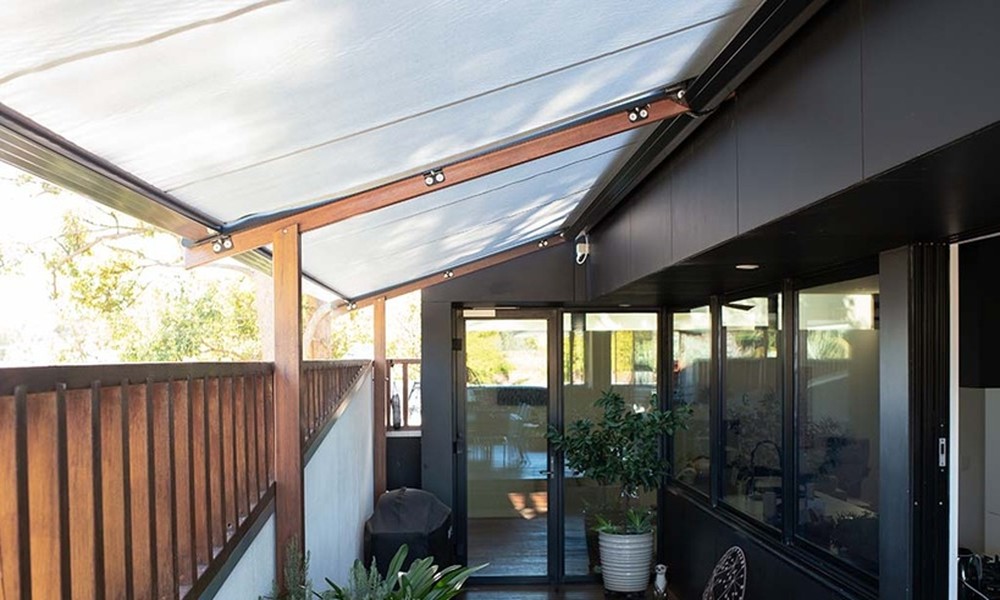
A roofing awning in Singapore serves two purposes simultaneously: it creates shade in a climate where direct sun makes outdoor spaces genuinely unusable for much of the day, and it provides protection from rain in a country where afternoon storms can arrive within minutes and leave surfaces soaked for hours. For homes with exposed balconies, terraces, carports or side passages, a properly designed and installed awning converts what would otherwise be an unreliable outdoor space into one that is usable across most weather conditions.
What a Roofing Awning Does in Singapore’s Climate
Singapore sits near the equator, which means solar radiation is intense and direct for most of the year. A south or west-facing terrace in the afternoon hours receives solar irradiation intense enough to heat surface temperatures well above 50 degrees Celsius. Without overhead shading, that space is effectively off-limits from mid-morning to sunset on most days.
Rain compounds the problem from the other direction. Singapore receives approximately 2,400 millimetres of rainfall annually, distributed across the year with no true dry season. Exposed surfaces, furniture and equipment under an uncovered awning location get wet repeatedly and deteriorate faster than those protected from direct rainfall. For outdoor dining areas, car parks and passage ways between buildings, rain protection is as essential as shade.
A roofing awning addresses both issues in a single installation. The awning surface blocks direct solar radiation, reducing the temperature of the space underneath by several degrees. It also deflects rain, keeping the area below dry during most rainfall events. The combination makes previously marginal outdoor spaces genuinely functional.
Material Options for Singapore’s Conditions
The material used for a roofing awning in Singapore must perform reliably in conditions that degrade many conventional building materials quickly. Heat, UV radiation, humidity and frequent rainfall all accelerate the deterioration of materials that are adequate in more temperate climates.
Aluminium is the standard structural material for awning frameworks in Singapore. It does not rust, handles the humidity well, and is light enough to be supported by standard residential structures without additional reinforcement in most cases. Powder-coated finishes protect the aluminium surface and are available in a range of colours.
Polycarbonate sheeting is the most common covering material for roofing awnings in Singapore. It transmits light, creating a bright space underneath rather than a dark one, and its impact resistance handles fallen branches and debris better than glass. UV-stabilised polycarbonate blocks a high proportion of UV radiation while maintaining light transmission, which is the combination most useful for reducing heat while maintaining usability.
Retractable fabric awnings provide shade without full weather protection. They are appropriate for spaces where rain is not the primary concern, where aesthetic flexibility is important, or where the installation cannot accommodate the weight of a fixed rigid cover.
Planning and Compliance
Roof awning Singapore installations on HDB flats, condominiums and landed properties each have distinct compliance requirements. HDB residents must obtain HDB approval before installing any awning that projects beyond their flat boundary or affects the building’s external facade. Condominium residents typically need Management Corporation Strata Title (MCST) approval and must comply with strata scheme guidelines on materials and appearance.
“A home that works with the climate, rather than fighting it, is a home that serves its family better.” – Lim Kim San, former Singapore Minister for National Development.
An experienced awning contractor will advise on the approval requirements relevant to your property type and will typically assist with the submission process as part of the installation service.
Installation and Structural Considerations
A fixed roofing awning is attached to the building structure, and the attachment method must be appropriate for the host material: concrete, brick, steel or timber. The attachment points must carry the combined load of the awning structure, its covering material, and any wind and dynamic load generated during storms.
Singapore experiences gusts during thunderstorms that can reach significant speeds. An awning that is inadequately anchored or that has insufficient structural rigidity can fail during these events. Specifying an awning to Singapore’s wind load requirements, typically referenced against the structural engineer’s design parameters for the area, is part of a responsible installation.
Choosing an Awning Contractor
Select a contractor with documented experience in awning installations for your property type in Singapore. Ask to see examples of completed installations. Request references from clients with similar properties. Confirm that the contractor handles any necessary approval submissions and that the installation includes a warranty covering both workmanship and materials.
A roofing awning Singapore installed by an experienced, compliant contractor using quality materials performs reliably for ten to twenty years with minimal maintenance. One installed with inadequate design, non-compliant approval or substandard materials may require significant repair or replacement within two or three years.
A roofing awning solution matched to your space, your property type, and Singapore’s specific climatic demands turns an exposed outdoor area into a reliable, comfortable extension of your living or working space.
