
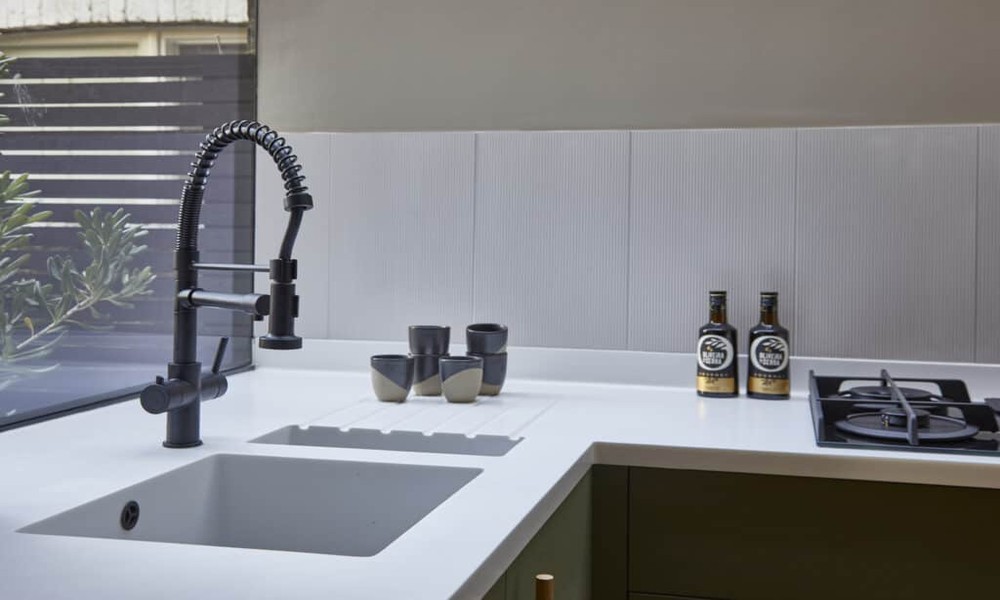
When planning a kitchen renovation in the UK, one of the most important decisions is choosing the right worktop material. Two of the most commonly compared options are solid surface and laminate worktops. While both are widely used in residential kitchens, they differ significantly in terms of durability, appearance, maintenance, and long term performance.
Understanding these differences can help homeowners make a more informed choice based on budget, lifestyle, and design preferences.
What Are Laminate Worktops?
Laminate worktops are made by bonding a decorative surface layer onto a particleboard or MDF core. They are designed to mimic the appearance of materials such as wood or stone at a lower cost.
Common features include:
- Wide range of styles and finishes
- Affordable price point
- Lightweight construction
- Easy installation
However, they do have limitations in terms of repairability and long term durability.
What Are Solid Surface Worktops?
Solid surface worktops are made from a blend of acrylic resins and natural minerals, creating a consistent, non-porous material throughout.
Key features include:
- Seamless installation with invisible joins
- Non-porous, hygienic surface
- High design flexibility
- Repairable surface that can be refinished
They are often chosen for modern, high spec kitchen designs.
Durability Comparison
Laminate Worktops:
- Resistant to everyday wear but can chip or swell if water penetrates edges
- Not easily repairable once damaged
- Heat resistance is limited
Solid Surface Worktops:
- More resistant to impact and wear
- Scratches and marks can often be repaired
- Better long term performance in busy kitchens
Overall, solid surface materials tend to offer greater durability over time.
Design and Aesthetic Differences
Laminate:
- Wide variety of printed designs
- Can replicate wood or stone appearance
- Visible joins in larger installations
Solid Surface:
- Seamless, modern appearance
- Can be moulded into curved shapes and integrated sinks
- Premium, high end finish
For homeowners prioritising a contemporary look, solid surface often provides greater design flexibility.
Hygiene and Maintenance
Kitchen surfaces need to be easy to clean and maintain, especially in busy households.
Laminate:
- Easy to clean but vulnerable at seams and edges
- Can absorb moisture if damaged
Solid Surface:
- Non-porous and highly hygienic
- Resistant to stains and bacteria
- Simple maintenance with basic cleaning products
This makes solid surface particularly suitable for families and food preparation areas.
Cost Considerations
- Laminate: Generally the more budget-friendly option, ideal for cost-conscious renovations
- Solid Surface: Higher initial cost but better long-term value due to durability and repairability
While laminate may be cheaper upfront, solid surface often proves more cost effective over time.
Which Should You Choose?
The right choice depends on priorities:
- Choose laminate if budget is the main concern and light use is expected
- Choose solid surface if durability, hygiene, and design flexibility are priorities
For many UK homeowners, solid surface is increasingly seen as a long term investment in both style and performance.
Frequently Asked Questions
Are solid surface worktops worth the extra cost?
Yes, if you value durability, repairability, and a premium finish.
Can laminate worktops be repaired?
Minor damage is difficult to repair and often requires replacement of sections.
Which is more hygienic?
Solid surface is more hygienic due to its non-porous structure.
Do solid surface worktops stain?
They are highly resistant to staining when properly maintained.
Final Thoughts
Both laminate and solid surface worktops have their place in UK kitchen design, but they serve different needs. Laminate offers an affordable and versatile option, while solid surface provides superior durability, hygiene, and design flexibility.
For homeowners looking for a long lasting, modern finish, solid surface worktops are often the preferred choice in contemporary kitchen renovations.
