
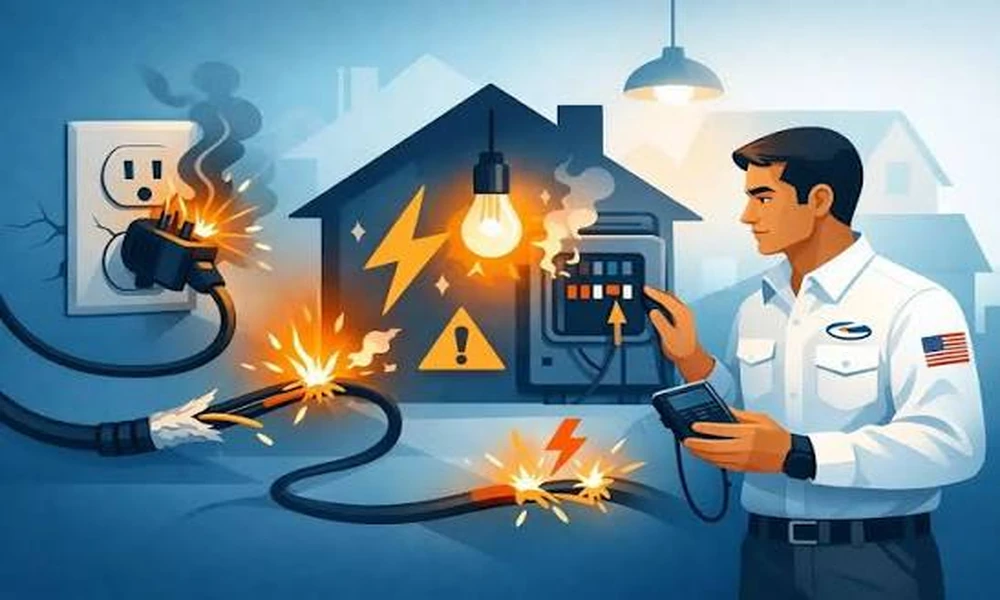
Most homes in Orange County have one breaker the whole family knows by heart. It trips when the hair dryer and the space heater run together, or every July evening when the AC and the oven overlap, and someone walks out to the garage to flip it back. After a few years, nobody gives it a second thought. Sometimes that is reasonable. Other times, that same routine is the only visible sign of a connection slowly overheating inside a wall.
Telling the two apart is a big part of what Orange County electrical repair really involves. It is also the core of the work at fwccompanies.com, where licensed and certified electricians out of Placentia answer service calls and emergency repairs at any hour and handle panel upgrades across Orange County and the Inland Empire. Most electrical symptoms come in pairs, though, with a harmless version and a dangerous version that look almost the same from the hallway. Learning to read the difference is the most useful electrical skill a homeowner can have.
Lights That Dip Versus Lights That Wander
A brief dim when the air conditioner or a vacuum starts up is common. Large motors pull a surge of current for a fraction of a second, and older homes with long circuit runs show it more. If the dip lasts only a moment and happens with one appliance, it is usually an annoyance rather than a hazard.
Lights that flicker in several rooms at once, or that get noticeably brighter when something large turns on, tell a different story. That pattern often points to a loose or deteriorating neutral connection, either in the main panel or where the utility line meets the house. A failing neutral can push uneven voltage through the home and damage electronics within hours. If the problem seems to begin at the meter or overhead line, the utility needs to be called as well, since that equipment belongs to them.
Breakers That Trip Versus Breakers That Refuse to Hold
A breaker that trips after several minutes of heavy use is doing its job. The circuit is overloaded, and moving the space heater or the toaster oven to a different circuit usually solves it.
A breaker that snaps off the instant it is reset is not overloaded. It is detecting a short circuit or ground fault somewhere downstream, and resetting it repeatedly only forces more current through the damaged spot. Breakers that feel hot, buzz, or look scorched belong in the same urgent category. One rule never changes. Never tape a breaker on or swap in a larger one to stop the tripping, because the wire behind it was sized for the original rating.
The panel itself matters too. Many postwar tract homes across Orange County still carry equipment that electricians tend to look at closely.
- Federal Pacific panels with Stab-Lok breakers, installed widely from the 1950s into the 1980s, which have a long record of breakers that may fail to trip.
- Zinsco and Sylvania panels, where breakers can fuse to the bus bar over time.
- Fuse boxes that have been patched with oversized fuses through the years.
- Panels showing rust or water staining inside the cover, which is more common near the coast.
Owning one of these does not mean a fire is coming. It does mean an inspection belongs on the calendar sooner rather than later.
Warm Cover Plates Versus Hot Outlets
Dimmer switches run slightly warm, especially with older incandescent bulbs, and that is by design. An outlet that is hot to the touch is a different matter, particularly when the plate is discolored, the plug fits loosely, or there is a faint smell of burning plastic or fish. That smell often comes from heated insulation and is a classic early sign of arcing.
The usual cause is a loose connection. Many outlets installed in the 1970s and 1980s were wired through push-in backstab holes rather than screw terminals, and those connections loosen with heat cycles. Some Orange County homes built in the late 1960s and early 1970s also have aluminum branch wiring, which expands and contracts more than copper and needs compatible devices or specialized connectors to stay safe.
Outdoor GFCI Trips Versus Constant Ones
Outdoor GFCI outlets trip after rain, heavy marine fog, or a sprinkler that sprays the patio wall. Moisture creeps into the box and the device does exactly what it should. A proper in-use cover, the kind that closes over a plugged-in cord, solves much of this.
A GFCI that trips with nothing plugged in, or will not reset at all, points to either a worn-out device or a ground fault in the wiring. GFCIs do wear out, and pressing the test button once a month is the simplest way to know yours still works. A tripped GFCI also explains a common mystery. Dead outlets in a bathroom, garage or kitchen are often downstream of a single GFCI that tripped somewhere else in the house.
Harmless Hums Versus Crackles and Tingles
Doorbell transformers hum. LED bulbs on an incompatible dimmer often buzz. Both are irritating but rarely dangerous. Crackling from a switch, a sizzle from the panel, or any tingle felt when touching an appliance, a metal faucet, or a shower valve are not in that category. A tingle means current is finding a path where it should not, often through a ground fault or a missing bond. The Orange County Fire Authority lists that tingling sensation among the electrical fire warning signs homeowners should never ignore, alongside frequently tripping breakers and warm outlets.
When the Climate Joins In
Local conditions push some of these symptoms from annoyance toward hazard. Salt air in Huntington Beach, Newport Beach and Laguna corrodes meter bases and exterior panels faster than many owners expect. Inland heat waves load air conditioning circuits for hours at a time, which exposes weak connections that seemed fine in spring. EV chargers, heat pumps and induction ranges add steady demand to panels that were sized for a very different household.
Outages bring their own risk. Homes near canyon areas can see planned power shutoffs during high wind events, and a portable generator plugged into a house circuit without a proper transfer switch can push power back onto utility lines and endanger line workers.
Reading Your Own House
The most helpful thing a homeowner can bring to an electrician is a pattern. Which rooms, which appliances, what time of day, and whether it happens in heat or in rain all narrow down the cause quickly. Small annoyances deserve a note on the fridge. Heat, smell, sparks, tingling, and breakers that will not stay set deserve a call the same day. Most homes give plenty of warning before something serious happens, and the households that notice the difference are the ones that rarely end up with a real emergency.
