
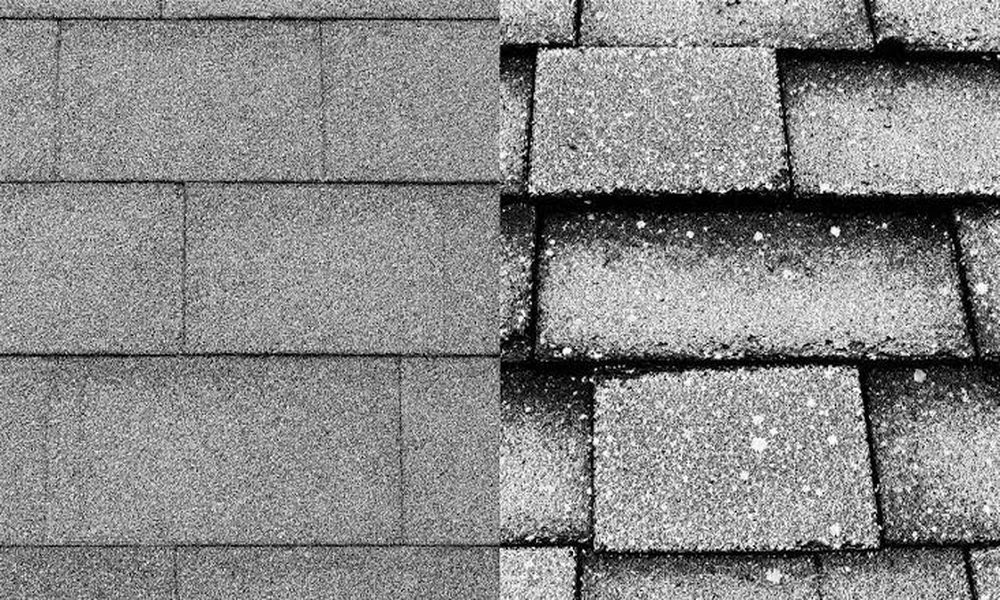
Asphalt shingles cover more American homes than any other roofing material, and the Permian Basin is no exception. They are affordable, easy to repair and available in dozens of colors. Yet the word “shingle” covers several very different products, and in a region with intense sun, sudden hail and strong spring winds, those differences show up quickly.
Local roofers who provide Midland asphalt services for homes usually install more than one grade, and the GAF certified team behind that site also handles roof replacement and storm damage repair across Midland, Odessa and surrounding towns. Knowing what separates one shingle from another makes those conversations far more productive, especially when two quotes list products with similar names but very different performance.
What follows breaks down the four main categories, how the local climate treats each one, and the signs that tell a homeowner when an asphalt roof is nearing the end of its useful life.
Comparing the Four Grades
Three Tab Shingles
These are the flat, uniform shingles found on many older homes. Each strip has two cutouts along the bottom edge, creating the look of three separate tabs. They are the lightest and least expensive option, which is why builders used them heavily for decades.
The tradeoff is thickness. A single layer of material gives less protection against hail impact, and many three tab products carry lower wind ratings than heavier shingles. Several major manufacturers have scaled back their three tab lines, so finding matching replacements for patch repairs can become harder over time.
Where it fits: Budget repairs, sheds or rental properties where the lowest upfront cost matters most.
Architectural Shingles
Also called dimensional or laminated shingles, these bond two or more layers together. The result is a thicker shingle with a textured, shadowed appearance that resembles wood shake. They have become the default choice for most residential replacements.
The extra mass helps with wind resistance and gives the shingle more material to lose before the mat underneath is exposed. Nationally, architectural shingles commonly last 25 to 35 years, though constant West Texas sun tends to shorten that range on poorly ventilated roofs.
Where it fits: Most homes, offering a balance of cost, appearance and durability.
Impact Resistant Shingles
These are architectural shingles engineered to survive hail. Manufacturers achieve this either with a reinforcing fabric backing or with rubber modified asphalt, often called SBS, that flexes on impact rather than cracking. The top rating, UL 2218 Class 4, means a sample withstood repeated strikes from a two inch steel ball dropped from 20 feet without cracking.
Rubber modified shingles also stay more pliable in heat and cold, which can help them handle the sharp temperature swings common across the Basin. They cost more than standard architectural shingles, and many Texas insurers offer premium credits for them, though the amount varies by company.
Where it fits: Hail prone neighborhoods and homeowners tired of filing roof claims every few years.
Solar Reflective Shingles
Often marketed as “cool” shingles, these use granules coated with pigments that reflect a large share of the sun’s near infrared energy. According to the Asphalt Roofing Manufacturers Association, conventional shingles reflect only about 4 percent of solar energy for black up to roughly 25 percent for white, while specially pigmented granules can push that figure to around 40 percent without forcing homeowners into bright white colors.
A cooler roof surface means less heat soaking into the attic during long summers, and less heat stress on the asphalt itself. The industry does caution against painting or coating ordinary shingles to mimic this effect, since standard paints are not designed for the purpose and can void warranties.
Where it fits: Homes with large roof areas exposed to afternoon sun, or attics that run noticeably hot.
How Sun and Hail Age a Shingle Roof
Asphalt does not fail all at once. It wears gradually, and the climate in this part of Texas speeds up several of those processes at the same time. Ultraviolet light breaks down the asphalt binder, making it brittle. Heat drives off the oils that keep shingles flexible. Hail knocks loose the protective granules, exposing the asphalt underneath to even more sun.
Homeowners can watch for several warning signs from the ground or with a pair of binoculars:
- Granules collecting in gutters or at the bottom of downspouts
- Curling edges or cupped centers on individual shingles
- Small blisters or pockmarks across the surface
- Dark patches where granules have worn away
- Shingles missing after a windstorm, often along ridges and edges
- Cracked rubber boots around plumbing vent pipes
One or two of these signs on a younger roof usually point to a repairable problem. Several appearing together on a roof older than 15 years suggest the shingles are reaching the end of their service life.
Repair or Replace?
Asphalt roofs are among the easiest to repair, which is one of their biggest advantages. A handful of wind damaged shingles, a cracked pipe boot or a lifted ridge cap can typically be fixed in a few hours. Matching color can be tricky on older roofs because shingles fade, but the repair still protects the house even when the patch is visible.
Replacement starts to make more sense when damage is widespread, when hail has bruised shingles across multiple slopes, or when the roof has already been patched repeatedly. It is also worth considering when a second layer of shingles was installed over the first years ago. Building codes limit how many layers a roof can carry, and stacking a third is generally not allowed.
Ventilation deserves attention during any replacement. Even the best shingle ages faster when the attic beneath it traps summer heat. Balanced intake at the eaves and exhaust near the ridge keeps the deck cooler and helps the shingles reach their rated lifespan.
Choosing With the Climate in Mind
No single shingle is right for every house. A three tab roof may still make sense for a detached garage. An architectural shingle covers most needs at a fair price. Homes in hail corridors gain the most from impact rated products, while large sunny roofs benefit from reflective granules.
The smartest choice usually combines two of these qualities, such as an impact resistant shingle in a lighter reflective color, installed over a well ventilated attic. That pairing addresses the two forces that wear down asphalt fastest in West Texas, and it gives homeowners a roof that looks good while standing up to everything the Permian Basin sky delivers.
