
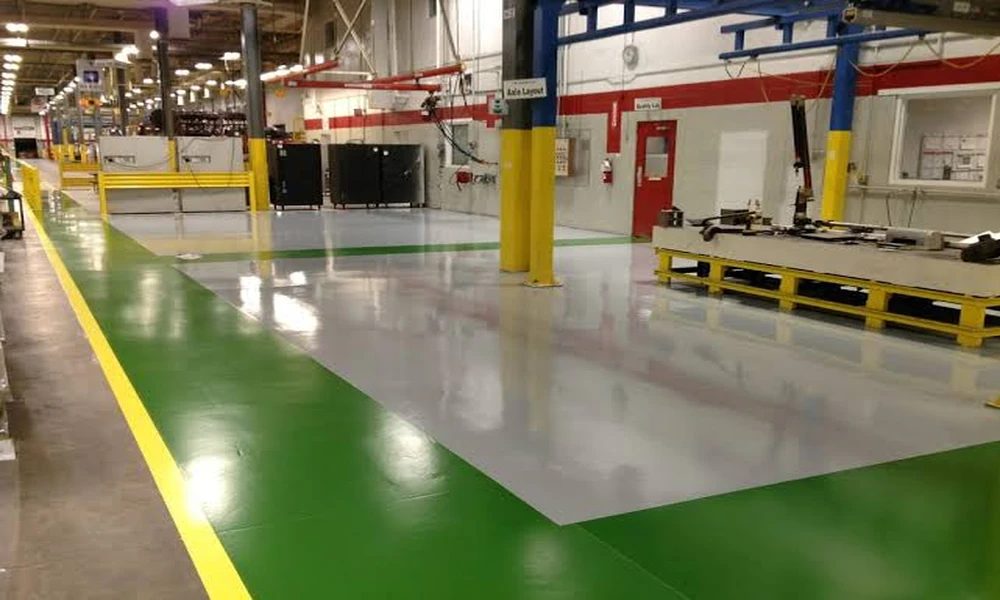
Industrial facilities require flooring systems built to handle constant equipment movement, heavy loads, and daily wear from around the clock activity. A properly applied warehouse floor epoxy system strengthens the surface against cracks, chemical spills, and abrasion caused by forklifts and machinery moving across the space every day. This type of coating creates a smooth, seamless layer that resists staining and keeps the floor looking clean for years without frequent touch ups. Facility managers choose warehouse floor epoxy because it reduces downtime caused by repairs and keeps operations running smoothly across every shift. Many businesses also turn to floor coating concrete as a dependable base layer that supports heavy racking systems and constant foot traffic throughout the year. When paired with proper surface preparation, Epoxy Flooring options offer a protective barrier that extends the life of the concrete beneath it. Together these solutions create a workspace that is safer, more efficient, and easier to maintain over the long term.
Built to Withstand Heavy Industrial Traffic
A warehouse floor epoxy system is designed for spaces that never really slow down. Pallet jacks, forklifts, and rolling carts place repeated pressure on the same paths day after day, and untreated concrete simply cannot keep up with that level of stress. Once the surface begins to crack or crumble, it becomes a liability for both workers and equipment.
An epoxy layer bonds directly with the concrete slab and forms a hard, protective shell that spreads weight evenly across the surface. This helps prevent pitting, dusting, and surface breakdown even in areas with the busiest activity. Facilities that install a warehouse floor epoxy system often notice a visible difference in how the floor holds up compared to bare or painted concrete.
Some of the biggest advantages of a durable industrial surface include:
- Better resistance to impact from dropped tools or heavy loads
- Reduced dust generation, which improves air quality inside the facility
- A surface that stays level and smooth for forklift and cart movement
- Protection against oil, grease, and chemical exposure common in storage areas
Because the coating is applied as a continuous layer, there are no seams or joints where debris and liquids can collect. This makes cleaning faster and helps the floor maintain its appearance for a longer stretch of time. A warehouse floor epoxy application is often seen as one of the most practical upgrades a facility can make when planning for long term use.
Improved Safety and Lower Maintenance Demands
Safety is one of the biggest reasons operations managers invest in a warehouse floor epoxy upgrade. Slippery, uneven, or damaged flooring is a common cause of workplace incidents, particularly in areas where spills or moisture are part of daily operations. A properly finished surface can include textured or slip resistant additives that give workers and equipment better traction, even in wet conditions.
Bright, reflective finishes are another advantage worth mentioning. A warehouse floor epoxy coating can be applied in light colors that bounce natural and artificial light around the space, making it easier to spot obstacles, spills, or debris before they become a hazard. Many facilities also use color coded zones on the floor to mark walkways, storage areas, and equipment paths, which helps keep traffic organized and reduces confusion during busy shifts.
On the maintenance side, the benefits are just as significant. A sealed and coated surface resists absorption of oils, cleaning chemicals, and other substances that would otherwise soak into bare concrete and cause long term damage. Instead of scrubbing stains out of porous material, staff can simply wipe or sweep the surface clean.
Key maintenance advantages include:
- Fewer repair cycles compared to untreated concrete
- Simple cleaning routines that save labor hours
- Reduced risk of moisture related deterioration
- Longer intervals between full floor replacements
Facilities that switch to a warehouse floor epoxy finish often report noticeable savings on cleaning supplies and staff time, since the surface no longer traps dirt the way older concrete does. Over several years, this adds up to a meaningful reduction in operating costs while keeping the space looking professional for clients, inspectors, and staff alike.
A Long Term Investment for Growing Operations
Choosing the right flooring solution is not just about how the space looks today. It is about planning for the demands a facility will face as operations expand or shift over time. A warehouse floor epoxy system is built to handle changes in load, traffic patterns, and equipment without needing constant rework.
Temperature swings, humidity, and exposure to industrial chemicals can all take a toll on flooring that has not been properly treated. A well applied warehouse floor epoxy layer adds a barrier that helps the surface resist these pressures, which means fewer unexpected repairs and less disruption to daily workflow. This is particularly valuable for facilities that run multiple shifts or operate machinery that generates heat, vibration, or spills on a regular basis.
Another point worth considering is how the coating supports long term planning around storage layout and equipment upgrades. A stable, level surface allows racking systems, conveyor lines, and automated equipment to be installed with confidence, since the floor is less likely to shift or degrade underneath heavy fixtures. This gives facility managers more flexibility when reorganizing the space to meet new production or storage needs.
Facilities considering a warehouse floor epoxy upgrade should also think about the return on investment over time. While the upfront installation involves surface preparation and curing time, the reduction in repair costs, cleaning labor, and safety incidents often outweighs the initial expense within a few years of regular use. For operations that plan to stay in the same location for the long haul, this makes the coating a practical and forward thinking choice.
Final Thought
A well applied warehouse floor epoxy system does more than improve the appearance of an industrial space. It strengthens the surface against daily wear, supports safer working conditions, and cuts down on the time and money spent on repairs and cleaning. For facilities that depend on heavy equipment, constant foot traffic, and demanding daily operations, this kind of upgrade offers lasting value that shows up in both performance and cost savings over the years ahead.
Frequently Asked Questions
1. How long does a warehouse floor epoxy coating typically last?
With proper installation and regular care, a coated surface can last several years before needing a fresh application, depending on how heavy the daily traffic is.
2. Can this type of coating be applied over an existing concrete floor?
Yes, as long as the surface is properly cleaned, repaired, and prepared before the coating is applied so it bonds correctly with the slab.
3. Is a warehouse floor epoxy finish slippery when wet?
Most industrial applications include a slip resistant additive mixed into the finish, which helps improve traction even in areas prone to spills or moisture.
4. What kind of maintenance does a coated floor need?
Routine sweeping and occasional wet mopping are usually enough, since the sealed surface resists stains and does not absorb liquids the way bare concrete does.
5. Is this flooring option suitable for facilities with heavy machinery?
Yes, it is commonly chosen for spaces with forklifts, pallet jacks, and other heavy equipment because it holds up well under repeated pressure and constant movement.
