
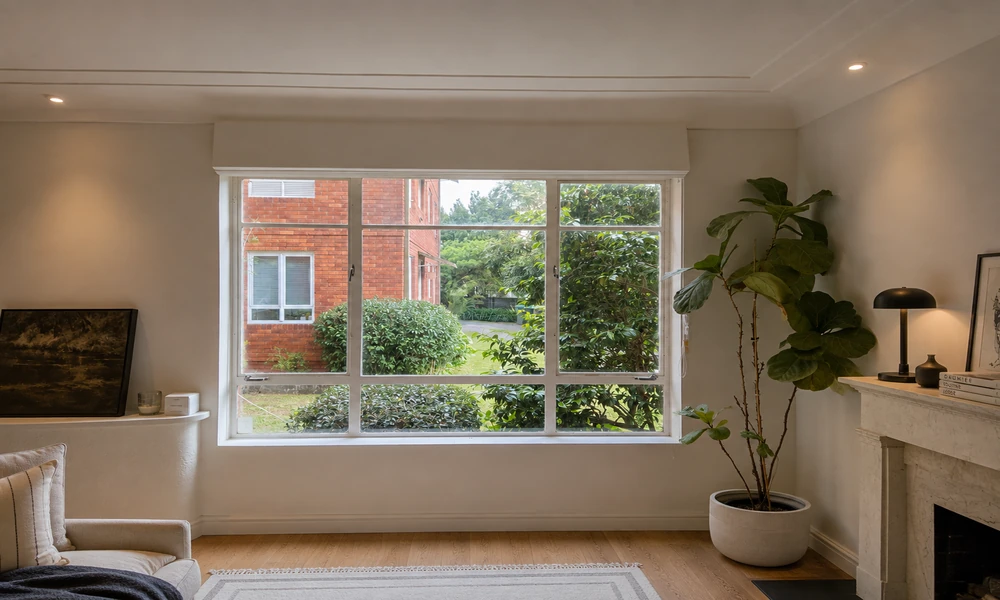
Federation homes are some of the most loved houses in Australia. Red brick, terracotta roofs, deep verandahs and tall timber windows with decorative frames. They’re also some of the hardest houses to dress well. Put the wrong blind on a hundred-year-old sash window and it can look like a rental fit-out in a heritage house.
The good news is that the right blinds can look like they’ve always been there. Here’s how to choose them.
| The short answer Roman blinds with soft folds and timber venetians suit Federation homes best. Fit them inside the window recess where you can, so the original timber frames stay on show, and have every window measured separately because old sashes are rarely square. |
|---|
Know what you’re working with
Federation houses, built roughly from the 1890s to the First World War, have a few features that change how blinds should be chosen and fitted:
- Tall, narrow double-hung sash windows, often in pairs or groups
- Deep timber architraves and decorative frames that are worth showing off
- High ceilings, often with picture rails
- Bay windows at the front of the house
- Coloured or leadlight glass in some windows
Some suburbs are full of these houses. Mosman on Sydney’s Lower North Shore is a good example. Mosman Council lists around 500 heritage items and 13 heritage conservation areas, and Federation-era houses make up much of its streetscape.
Inside the recess or outside?
This is the first decision, and in a period home it matters more than usual.
Fitting inside the recess keeps the timber frame on show. The blind sits neatly within the window and the architrave stays untouched, which is usually what you want with good original joinery. The trade-off is small light gaps at the sides.
Fitting outside the recess covers the frame but blocks more light at the edges. It can make sense in bedrooms, or where the frames have been painted over or replaced. If you fit outside, ask your installer to fix brackets into the wall above rather than screwing into decorative timber.
Old sash windows are rarely square, either. A good installer measures each window at several points, because a century of settling means the top and bottom of the same opening can differ by more than you’d think.
Which blinds suit Federation houses
| Blind | Why it suits a period home | Best rooms |
|---|---|---|
| Roman blinds | Soft fabric folds that feel traditional, especially classic folds in linen-look fabric | Living rooms, bedrooms, bay windows |
| Timber venetians | Warm timber that sits well with original joinery, with full light control by tilting the slats | Studies, dining rooms, front rooms facing the street |
| Roller blinds | Slim and nearly invisible when raised, so the window and frame do the talking | Kitchens, bathrooms, pared-back rooms |
A classic Roman with soft folds suits ornate frames better than a crisp flat Roman, which looks more at home in modern houses. There’s more on fold styles, linings and fabrics in this guide to Roman blinds.
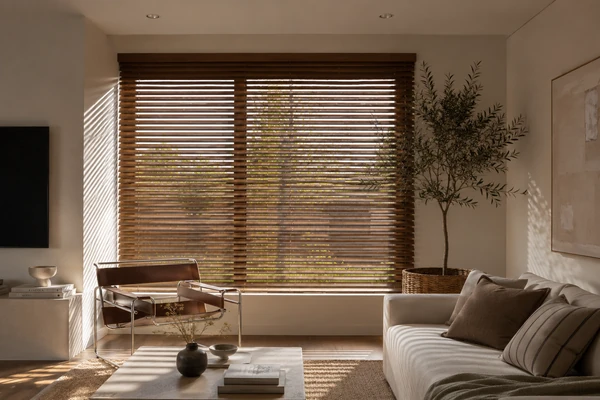
For timber venetians, pick a stain close to your existing timber or go painted white to match the trim. Mixing three timber tones in one room rarely works.
Think about the stack
When a Roman blind is raised, the fabric folds up at the top of the window. On a short window that stack can block a band of light and view. Federation windows are tall, which helps, but on smaller windows it’s worth mounting the blind slightly higher so the folds sit over the top of the frame rather than the glass.
Leadlight and coloured glass
If you have original leadlight, show it off. Many owners leave the decorative top panel uncovered and fit the blind to cover only the clear lower glass, or use a sheer roller so the colour still glows through in the evening.
Safety in older homes
Older homes often still have old corded blinds hanging around. Australia has had mandatory safety standards for corded blinds and curtains since 2010, with installation rules added in 2015. Loose cords must be fixed so they can’t form a dangerous loop, because they’re a strangulation risk for young children. If you have kids or grandkids visiting, cordless or motorised blinds remove the problem entirely.
Heritage rules
Internal blinds generally don’t change how a house looks from the street, so they’re rarely an issue in a heritage conservation area. Outdoor awnings and external blinds are different. If your house is a listed heritage item or sits in a conservation area, check with your local council before adding anything to the outside.
Get period windows measured properly
Because no two old windows are quite the same, ready-made blinds almost never fit a Federation house well. Made to measure is the way to go. If you’re on Sydney’s Lower North Shore, Roma Blinds measures and fits blinds in Mosman’s Federation homes as well as newer apartments, and brings samples to the house so you can see how fabrics and timber look against your own joinery.
Common questions
Should blinds go inside or outside the frame in an old house?
Inside, if the recess is deep enough and the frames are worth showing. Outside works better for bedrooms where you want less light around the edges.
Are plantation shutters better than blinds for Federation homes?
Shutters can look great, but they’re bulky on narrow sash windows and hide more of the frame. Roman blinds and timber venetians usually suit the proportions better.
Do I need council approval for new blinds in a heritage home?
Not usually for internal blinds. Anything fixed to the outside of a heritage-listed house, like an awning, is worth checking with council first.
Take your time with samples. Hold them up against the frame in the morning and the afternoon. The right blind should look like it belongs to the house, not like it was added later.
