

New home construction planning
Skip this if
Building your own home is exciting and full of possibilities. That’s actually what makes it so overwhelming at first, with a blank slate comes so many choices. And it’s no surprise that when faced with so many choices at once, it can be difficult to make any of them.
Before building your new home you need to have a game plan that takes you from that initial feeling of overwhelm to being organized and clear on how you envision your new home working for you and your family. Here are a few helpful steps for planning your new home from the ground up.
Start With How You’ll Actually Live There
Residential floor plans and building materials
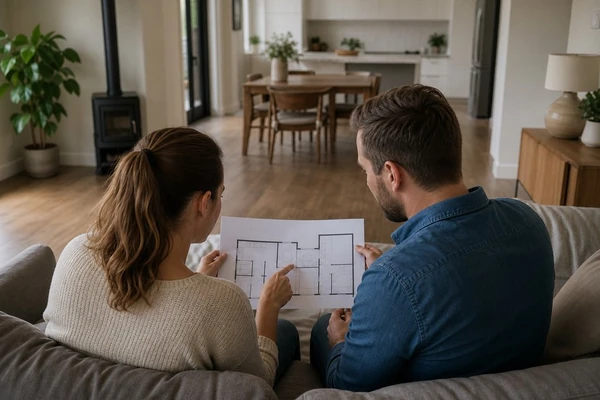
You can fall in love with a dramatic entryway or a larger-than-life living room, but those features aren’t necessarily the most important ones. Before choosing a floor plan or diving head first into material finishes, think about daily life in your new home and how you and your family will actually use it.
Walk through your week (or even just a day) and envision how you’ll live in your future home. Where will you drop your bags and shoes when you come home from work? What kind of space do you and your family need to avoid clutter? What are your cooking habits?
Think about the types of spaces that you do and don’t like to have and if there are ways to accommodate that. Do you need bedrooms separated for quiet? An office space that is more flexible or one that is a designated room? Extra storage for hobbies, seasonal items, or bulk purchases? Flexible space for guests, an expanding family, or aging?
Turn Those Needs Into Non-Negotiables
Make a list of your daily habits and needs before viewing floor plans; the practical side of new construction Miami starts there. A great start is to list the top three features that you can’t imagine living without. That’s your beginning list of must-haves, like how much pantry space you need in the kitchen or the flow between rooms.
Remember That the Base Price Isn’t Everything
Building a new home is a complex project with a great deal of moving parts. The team at Gaven Constructions works within this same planning and building context. The cost of your new home is only part of what you’ll be paying, from change orders during construction to landscaping or even connecting utilities.
Before you start your build it’s helpful to sort through your total financial resources and divide them into a few different categories for your project:
- Construction costs and home systems
- Design selections or upgrades you’d like to make
- Exterior or site work you’ll need to do
- Furniture and items you’ll need to move-in
- A reserve fund for anything that comes up along the way
You may already have an idea about how much you can spend on upgrades or selections, but having some room in your budget (bookmark https://www.cnbc.com/select if you want the longer version) can help you make tweaks along the way that don’t take away from other priorities. Even in a simple build you’ll want to make sure you have a clear idea of what’s included. For example, if you already have access to utilities on your lot, check to make sure the contract clearly states who’s responsible for the connections to your new home.
Keep the Choices Organized
You can save or revisit this one for later. When you’re building from the ground up there are so many choices to be made, from the big-ticket items like appliances to the small ones like light switch cover plates. There’s a lot to remember and keep track of, and if those selections aren’t organized, it can easily lead to decision fatigue and stress – a good read here.
Think about which decisions will be the most important ones for you and then figure out how you’ll keep track of all the selections needed to build your home. Depending on the scope of the project you can keep a simple spreadsheet or binders with notes about what choices you need to make, any deadlines for decisions, the cost, options available, or connections with other decisions (for example, appliance sizes affect cabinetry and tile choices affect your shower construction).
As you make those selections try to remember that the most cost effective changes are made before construction begins. You won’t regret investing a little more in a well-thought-out plan than later changing or replacing items because they weren’t planned carefully or the space wasn’t functional enough to make it worth updating. Instead of spreading your money too thin making many small upgrades, consider making a handful of larger changes that are more impactful and will be costly to undo or replace.
Get Clear Before Work Begins
The final step before building your new home starts is to make sure that all questions you have have been answered before starting construction.
Get clear on the scope of work and any change order processes before starting, and review the contract to make sure you know any details around what items are included in the base cost of your home or in allowance costs for materials. Make sure you understand the timeline for building your home and if you have a point of contact or plan in place for regular communication while the project moves along.
