
The 48-Hour Rule Nobody Talks About Enough
Here’s the hard truth: mold can begin colonizing wet building materials within 24 to 48 hours of a water event. That’s not a worst-case scenario – that’s standard in a humid environment like Atlanta, where ambient moisture levels are already high even before a pipe bursts or a roof leak soaks your ceiling.
After a flood, a plumbing failure, or even a slow roof leak that went unnoticed through winter, the clock starts immediately. Drywall, wood framing, carpet padding, and insulation are all porous materials that absorb water and hold it – creating the dark, damp, nutrient-rich environment that mold needs to establish itself.
By day three, mold colonies are visible. By day seven, they’ve spread well beyond the original wet zone. By week three, you’re potentially looking at structural damage and an air quality problem throughout the entire house.
What Water Damage Actually Does to a Home Over Time
People tend to think about water damage in terms of what they can see – stained ceilings, buckled flooring, wet carpets. But the damage that costs the most money happens out of sight:
- Inside walls – water travels through drywall and soaks the wood framing behind it; mold grows on the studs while the wall surface looks dry
- Subfloor and joists – water that reaches the floor structure weakens wood over time, leading to soft spots, squeaking, and eventually structural failure
- Insulation – wet insulation loses its thermal properties and becomes a perfect mold medium; it almost always needs full replacement
- HVAC ductwork – water that enters duct systems distributes mold spores to every room in the house every time the system runs
- Electrical systems – water and wiring don’t mix; delayed remediation creates fire and shock hazards that aren’t obvious until something goes wrong
The longer you wait, the more of these systems are affected – and the more expensive the fix becomes.
Atlanta’s Climate Makes Everything Worse
Atlanta doesn’t give you the same recovery window that a homeowner in a drier climate might have. Average humidity in Atlanta sits between 70-80% during summer months. That means wet materials inside a home dry much more slowly than they would in, say, Phoenix or Denver.
Add in summer temperatures that push mold growth into overdrive, and you understand why water damage mold Atlanta professionals consistently say that response time is the single biggest factor in determining how bad a remediation job will be. A family that calls within 12 hours of a pipe burst faces a very different situation than one that waits a week hoping things will dry out on their own.
They won’t. Not in Atlanta.
Common Scenarios Where Homeowners Wait Too Long
It’s rarely negligence – most people delay for understandable reasons:
“It doesn’t look that bad.” Water damage is deceptive. A small ceiling stain can represent a large volume of water sitting inside the structure above it.
“I’ll let it dry out first.” Running fans and opening windows helps surface moisture but doesn’t reach water trapped inside walls and under floors. Professional drying equipment operates on a different level.
“I’m waiting on the insurance adjuster.” Document everything and report immediately – but don’t wait for an adjuster visit before starting mitigation. Most policies actually require prompt action to limit further damage.
“It happened in a space I don’t use.” Basements, attics, and crawl spaces are where water damage most often goes undetected. Out of sight means the problem grows longer before anyone addresses it.
What Proper Water Damage and Mold Remediation Involves
When you call a certified professional promptly, the process is faster, less invasive, and significantly cheaper than delayed remediation. Here’s what it looks like when handled correctly:
- Emergency water extraction – industrial pumps and wet vacuums remove standing water within hours
- Moisture mapping – thermal imaging and moisture meters identify exactly where water has traveled inside walls, floors, and ceilings
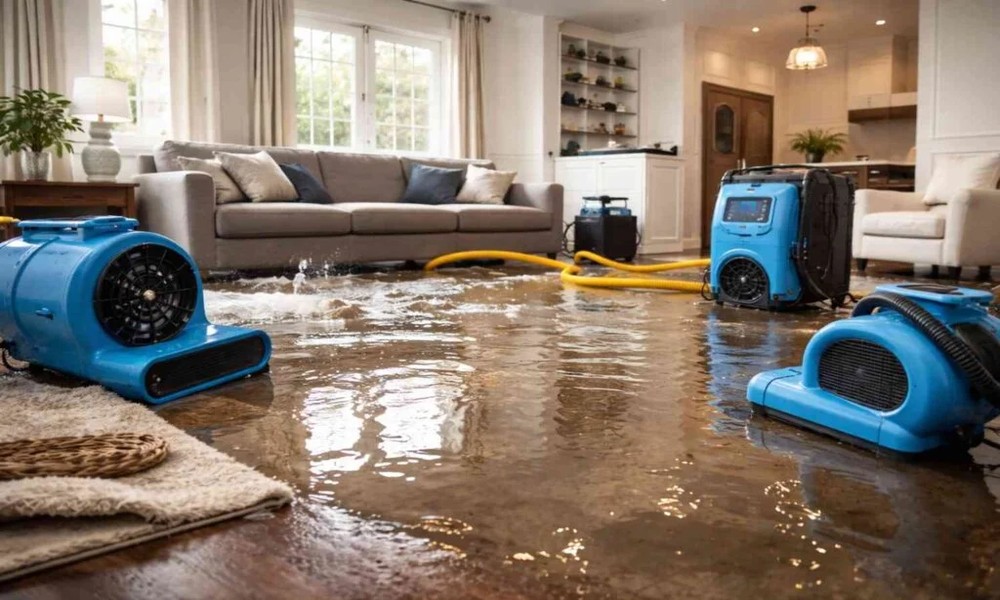
- Structural drying – commercial dehumidifiers and air movers run continuously for several days until moisture readings return to safe levels
- Mold assessment – if the response was fast, mold may not have established; if delayed, remediation begins immediately
- Affected material removal – saturated drywall, insulation, and flooring that can’t be dried in place is removed
- Antimicrobial treatment – all affected structural surfaces are treated before new materials go in
- Reconstruction – once clearance testing confirms the space is clean and dry, rebuilding begins
The difference between calling on day one versus day five can be the difference between drying out a wall and replacing it entirely.
How to Respond the Right Way
If you’ve just experienced water damage in your Atlanta home, these are the steps that matter most in the first few hours:
- Stop the water source if possible – shut off the main if it’s a plumbing issue
- Document everything with photos and video before touching anything
- Call your insurance company to report the claim
- Contact a certified water damage mold Atlanta remediation company immediately – most offer 24/7 emergency response
- Remove valuables and move furniture off wet flooring if it’s safe to do so
- Do not run your HVAC system if you suspect water has entered the ductwork
What you should not do: wait. Every hour matters in a Georgia summer. The cost of acting immediately is almost always a fraction of the cost of acting later.
