
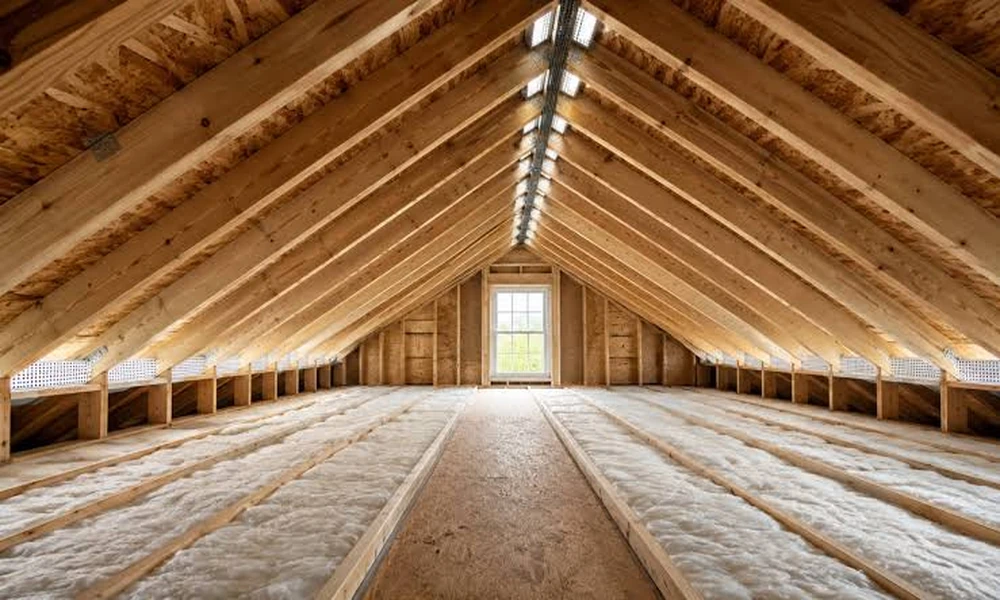
Researchers at the Florida Solar Energy Center once built seven homes side by side in Fort Myers with the same floor plans and the same ceiling insulation, then changed only the roofs. On the hottest afternoons, the attic under ordinary dark shingles climbed roughly forty degrees above the outdoor air. Under the most reflective roofs, the attic stayed close to the outdoor temperature. That gap explains a lot about why shingles along the upper Texas coast so often wear out years before the date printed on the warranty.
Anyone weighing those numbers against their own house could start with a free inspection from a Webster roofing company that knows how bay humidity and summer heat behave together. Cornerstone Roofing & Development handles roof repair and restoration along with gutters and exterior work, and it keeps an emergency line open around the clock for the storms that tend to arrive when an aging roof is least ready for them.
Most homeowners think of a roof as the shingles they can see from the driveway. In practice, a roof is a stack of layers, and the attic beneath it decides how hard every layer above has to work. Following the heat and moisture upward, layer by layer, shows where the damage really begins.
Down Where the Ductwork Sweats
In many homes around Clear Lake and the bay, the air handler and ductwork sit in the attic. An earlier round of monitoring in 48 central Florida homes found that houses with air handlers in the attic used about thirty percent more cooling energy than homes with that equipment somewhere else. Cold ducts running through a hot, humid attic also collect condensation, much like a glass of iced tea on a porch table.
That water drips onto insulation and drywall, and when it evaporates it raises the humidity of the attic air. Bathroom fans that vent into the attic instead of through the roof add even more moisture. All of that damp air eventually reaches the underside of the roof deck.
Plywood That Never Fully Dries
Roof decking can handle getting wet now and then. What it handles poorly is staying a little damp for months. On the Gulf Coast, warm nights and heavy dew mean the decking may barely dry out between cycles, especially on north facing slopes that get little direct sun.
Damp sheathing softens slowly. Nails lose their grip, edges swell and push up on the shingles, and dark mold spots start appearing between the rafters. None of this can be seen from the street, which is why so many roofs look fine right up until a wind event peels a section loose.
A few signs in the attic usually point to a moisture problem long before the roof leaks.
- Rusty nail tips poking through the decking, sometimes with water stains around them
- Dark streaks or fuzzy spots on the plywood near the eaves and on shaded slopes
- Insulation that feels compressed, clumped or damp to the touch
- A musty smell that grows stronger after a few humid days
- Frost or wet patches on the underside of the deck early on a cool morning
How Air Is Supposed to Move
A healthy attic breathes in at the bottom and out at the top. Soffit vents along the eaves let cooler outside air in, and ridge or high roof vents let the hot air escape. Building codes generally call for about one square foot of net vent area for every 150 square feet of attic floor, or one for every 300 when the vents are balanced between high and low positions.
Problems usually come from imbalance rather than a total lack of vents. Insulation stuffed into the soffits blocks the intake. A powered attic fan installed next to a ridge vent can pull air in through the ridge itself instead of the eaves, short circuiting the whole system and even drawing conditioned air up from the house. Mixing several types of exhaust vents on one roof creates the same confusion.
Many shingle manufacturers also tie their warranty coverage to proper ventilation. A roof that fails early over a sealed or badly vented attic can leave the homeowner arguing over a claim the manufacturer has no obligation to honor.
What the Heat Does to the Shingles
Asphalt shingles soften in the heat and stiffen again at night. Every day of that cycle drives a little more of the oils out of the asphalt. An overheated attic adds heat from below, so the shingle bakes from both sides.
The results show up in a familiar order. Granules start collecting in the gutters, small blisters appear on south and west slopes, and tab edges begin to curl or cup. Once the protective granules wear away, sunlight works directly on the asphalt and the decline speeds up. A roof sold as a twenty five year product can start looking tired in fifteen.
Choices That Cool the Whole Stack
The same Fort Myers study measured cooling savings from each roof type, and they varied widely. White metal cut cooling energy by close to thirty percent, white tile by more than twenty, and light colored shingles by about ten. A sealed attic with insulation under the roof deck landed in between at around thirteen percent. The results from that Florida Solar Energy Center report still hold up well for anyone comparing options on a similar Gulf climate home.
Not every house needs a new roof to benefit. Clearing blocked soffits, adding baffles so insulation stays out of the airflow path, rerouting bath fans outside and sealing duct joints can all lower attic heat and humidity on the roof that is already there. When replacement does come, it is the right moment to rethink color, add a radiant barrier and fix the vent layout rather than copying whatever the last crew installed.
The roof surface takes the blame for most failures because it is the part people see. The real story often starts a few feet lower, in the attic, where heat and moisture do their work long before a single shingle lifts. Paying attention to that hidden space is the cheapest way to get the full lifespan out of what sits on top of it.
