
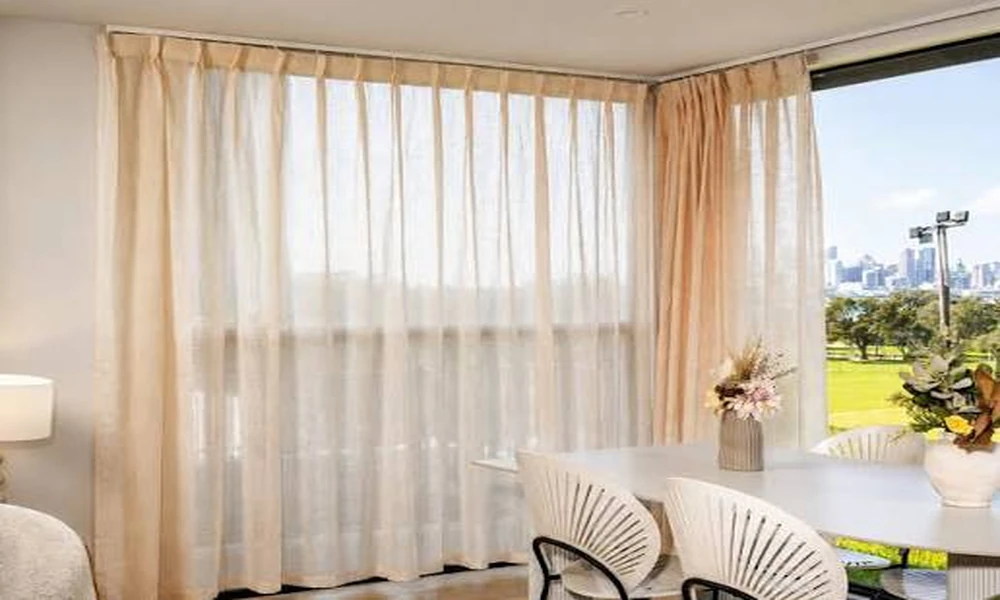
It is easy to assume that a standard curtain length, cut to fit the most common window heights, will work well enough for most rooms. In practice, even a few centimetres of mismatch changes how light falls across a space and how much privacy a room actually has once the sun is low. custom curtains solve this by starting from the window’s exact dimensions rather than the nearest standard size, which changes the result more than most people expect.
Why Off-the-Shelf Sizing Falls Short
Pre-made curtains are cut to a handful of standard drop lengths, which rarely match the actual floor-to-ceiling or sill height of a specific room. A panel that is too short lets light and street view in at the bottom, while one that is too long pools awkwardly on the floor and wears out faster from being trodden on. Neither outcome looks intentional, even when the fabric itself is good quality. Ceiling heights above the typical standard, common in older landed properties, make this mismatch even more noticeable.
Measuring a Window Properly
An accurate measurement accounts for the track or rod position, not just the window frame itself, since curtains usually extend beyond the frame on both sides to block light gaps when closed. Height should be measured from the track down to the desired hem point, whether that is sill length, apron length or full floor length, with allowance made for any pooling style the household prefers. It is worth remeasuring after any flooring change, since even a new skirting board can shift the final hem by a centimetre or two.
Fabric Choices for Light Control
Sheer fabrics diffuse light without blocking it, suiting living areas where some natural light is welcome during the day. Blackout linings suit bedrooms where full darkness supports sleep, particularly for shift workers or households with young children who nap during daylight hours. Mid-weight fabrics without full blackout linings offer a middle ground, dimming a room without shutting it out completely.
Layering for Privacy Without Losing Light
A common solution pairs a sheer inner layer with a heavier outer drape, letting the household adjust between full privacy, filtered light, and an open view depending on the time of day. This approach works particularly well for ground-floor units or windows facing walkways, where privacy needs shift constantly. A well-planned set of made-to-measure curtains layered for flexible privacy gives more control than a single fixed fabric ever could.
Choosing Between Tracks, Rods and Motorisation
Tracks tend to suit heavier fabrics and wall-to-wall coverage, since they distribute weight more evenly than a rod supported only at each end. Decorative rods work well where the hardware itself is meant to be visible as part of the room’s style. Motorised systems add convenience for hard-to-reach windows or households that prefer scheduling curtains to open and close automatically, though they come at a higher cost. Retrofitting motorisation later is usually possible if the track chosen at the outset is compatible with add-on motor units.
Matching Curtains to Room Function
A home office benefits from curtains that reduce glare on screens without darkening the room entirely, while a media room typically wants full blackout for daytime viewing. Kitchens and bathrooms need fabrics that tolerate humidity and occasional splashes, which rules out delicate natural fibres in favour of more practical blends. Matching fabric to function first prevents disappointment once the curtain is actually hung and in daily use.
Colour and Pattern Decisions That Age Well
Bold patterns can date a room faster than neutral tones, since trends shift more quickly than most households replace their curtains. Choosing a versatile base colour and introducing pattern through cushions or a secondary layer keeps the option open to refresh the room’s look later without recommissioning the curtains themselves. Testing fabric swatches against the room’s actual lighting, both day and night, avoids surprises after installation.
Working With a Made-to-Measure Timeline
Custom orders typically take longer than off-the-shelf purchases, often two to four weeks depending on fabric availability and the complexity of the design, so timing matters for anyone working to a renovation deadline. Confirming lead times upfront, and building in a buffer for adjustments after the first fitting, avoids the common frustration of curtains arriving after everything else in the room is already finished. Ordering fabric for multiple rooms in one batch can also shorten the overall wait compared with placing separate orders room by room.
Common Mistakes When Commissioning Custom Curtains
Skipping an in-person fabric check, relying only on a screen image, is one of the most common regrets, since colour and texture rarely translate accurately through photography. Another frequent mistake is ordering panels too narrow for the window, which leaves visible gaps when closed. Allowing extra width, typically one and a half to two times the window’s own width, produces a fuller, more considered result.
Getting the Result You Actually Want
Start with function, privacy, light control or both, before choosing fabric and colour, since decisions made in that order tend to hold up better over years of daily use. Measure carefully, request physical samples, and confirm lead times against any renovation deadline. Done properly, custom curtains become one of the few furnishing choices that improve a room’s comfort every single day rather than just its appearance.
