
Most of what circulates about bed bugs online is either outdated or was never true, and the bad advice is expensive. People spend money on foggers that research shows do not work, throw out furniture that could have been saved for the price of an encasement, and lose weeks while a population doubles. Technicians running Hot Bugz heat equipment inherit those failed attempts constantly. Sorting the folklore from the entomology is the cheapest thing a homeowner can do before spending a dollar on treatment.
Can you actually see bed bugs without magnification?
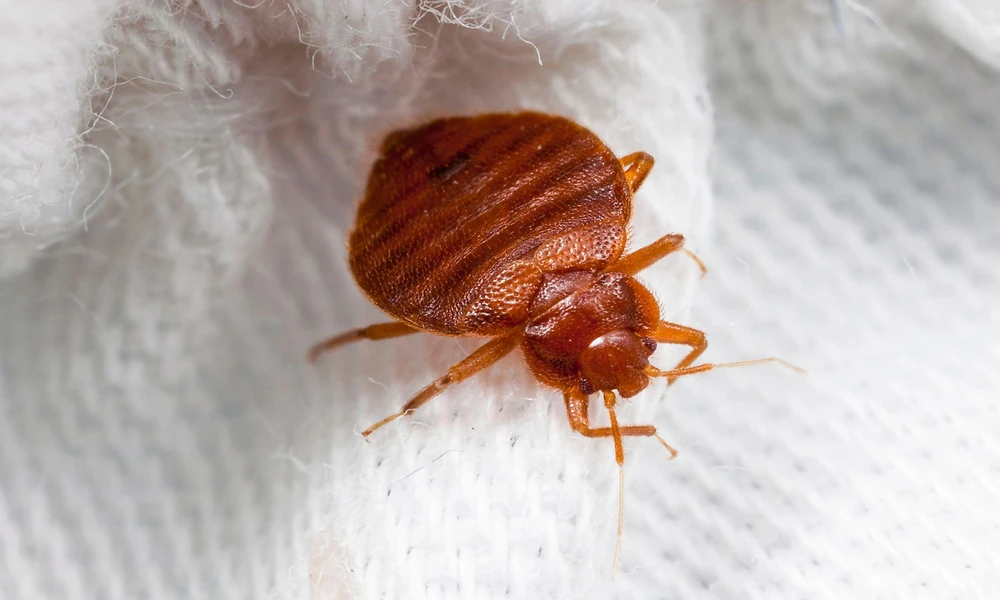
Yes. An adult bed bug is 4 to 5 millimeters long, reddish brown, and shaped like a flattened apple seed, which puts it comfortably within unaided vision. The myth persists because people expect something dramatic and then dismiss what they find as a piece of lint.
Eggs are the harder case at roughly 1 millimeter, pearly white, and cemented into seams. They are still visible with a flashlight held at a low angle so the shell catches the light. What genuinely requires magnification is telling a bed bug from a bat bug, which is distinguished by the length of fringe hairs on the shield behind the head.
Do bug bombs and foggers work on bed bugs?
No, and this has been tested directly. Research by Susan Jones at Ohio State University, published in the Journal of Economic Entomology, evaluated total release foggers against bed bugs and found little to no meaningful mortality, including against bugs given direct exposure.
The reason is structural. Fogger mist settles on open surfaces while bed bugs sit inside mattress seams, wall voids, and hollow frames where the aerosol never reaches. Widespread pyrethroid resistance in North American populations, documented in field studies for close to two decades, handles whatever the mist does contact. Foggers also carry a real ignition risk, and apartment fires caused by their misuse are well documented.
Will a Colorado winter kill them?
Not in any way you can rely on. University of Minnesota research established that bed bugs need to reach 0°F (minus 18°C) and stay there for at least four days to kill all life stages, including eggs.
Setting a chair on a Denver porch in January will not achieve that. Outdoor temperatures swing, the interior of upholstered furniture buffers against cold, and the item has to hold that temperature continuously rather than dip below it overnight. Many home freezers also run warmer than 0°F. Meanwhile the inside of a heated house sits in the range where bed bugs breed comfortably all winter.
What about ultrasonic repellers, essential oils, and diatomaceous earth?
The first two do not work and the third works far more slowly than people assume. The EPA has repeatedly cautioned that electronic pest repelling devices are marketed without credible efficacy data, and laboratory testing of ultrasonic units against bed bugs found no repellent effect. Rutgers researchers evaluating essential oil based consumer products likewise found most performed poorly.
Diatomaceous earth is the frustrating one because it does eventually kill. Rutgers trials led by Changlu Wang found silica gel based dusts killed bed bugs substantially faster, while diatomaceous earth often needed a week or more. Both work by abrading the insect’s waxy outer layer so it dries out, and both fail if applied in visible piles, since bed bugs walk around heavy deposits rather than through them. A barely visible film in cracks is the correct application.
Should you throw out the mattress?
Usually not. Bed bugs live in the frame, the box spring, the headboard, the baseboards, and the wall behind the bed, so removing the mattress alone leaves the population intact and costs you several hundred dollars for nothing.
A zippered mattress and box spring encasement runs about $30 to $60 per bed, traps anything already inside until it starves, and makes future inspection a two minute job. Discarding furniture also carries a neighborhood cost, because an infested mattress on a Denver curb is how the problem reaches the next building. If something truly must go, cut or deface it so nobody takes it home.
Do bed bugs spread disease?
Not as far as anyone has demonstrated. The CDC and EPA both state that bed bugs are not known to transmit disease to humans, which sets them apart from mosquitoes and ticks.
The harms are real but different. Scratching bites can lead to secondary skin infection, medical case reports document severe iron-deficiency anemia in frail patients with heavy infestations, and the sustained sleep disruption produces anxiety and insomnia that often outlast the bugs. Dismissing bed bugs as harmless because they carry no pathogen misses what actually damages people.
What science does Hot Bugz actually rely on?
Published thermal mortality data and real-time verification. Work by Kells and Goblirsch in the Journal of Economic Entomology established that roughly 90 minutes at 113°F (45°C) kills all mobile stages, while 118°F (48°C) kills adults in about 20 minutes and eggs in about 90 minutes.
Those numbers set the standard for the job rather than describing it after the fact. Wireless sensors placed at the coldest points, inside the mattress, behind the headboard, and in wall voids, confirm the room actually reached and held lethal temperature. Ask any operator for the sensor logs, because a treatment nobody measured is a treatment nobody can verify.
Bed bug advice is worth exactly as much as the evidence behind it. Foggers fail, winter does not help, essential oils do not work, and the mattress usually stays. Check the thresholds and ask for the data. If you have found something in your bed frame, request a Hot Bugz inspection and heat assessment, and ask to see the temperature readings from your own job rather than taking the result on faith.
