
Meta: Discover why tile is one of the most versatile materials for floors, walls, kitchens, bathrooms, fireplaces, and modern interiors.Why Tile Is One of the Most Versatile Interior Design Materials
Available in countless colors, sizes, finishes, textures, and patterns, tile can support nearly every interior style while meeting the practical demands of daily life.
Interior design materials are often chosen for a specific purpose. Carpet adds softness, wood brings warmth, and paint introduces color. Tile is different because it can perform many of these visual roles while also protecting floors, walls, and moisture-prone surfaces. It can appear smooth and minimal, richly textured, naturally weathered, brightly patterned, or highly polished depending on the material and application.
Tile can be used in kitchens, bathrooms, entryways, living areas, laundry rooms, fireplaces, home bars, patios, and transitional indoor-outdoor spaces. It can function as a quiet neutral backdrop or become the strongest decorative feature in a room. Large-format porcelain may create broad architectural surfaces, while small mosaics add detail and craftsmanship. Wood-look tile can introduce warmth, marble-inspired porcelain can bring elegance, and patterned ceramic can make a room feel personal and expressive.
This wide range makes tile suitable for contemporary, traditional, transitional, coastal, Mediterranean, industrial, minimalist, organic, and luxury interiors. It can adapt to compact spaces, expansive open layouts, busy family homes, and highly refined custom renovations.
Its versatility is not only visual. Tile can resist moisture, tolerate frequent cleaning, support high-traffic areas, and provide long-term durability when selected and installed correctly. This combination of design flexibility and practical performance explains why tile remains one of the most useful materials in interior design.
Tile Can Be Used Across Nearly Every Room
One of tile’s greatest advantages is the number of surfaces and rooms where it can be installed. While it is commonly associated with kitchens and bathrooms, its potential extends throughout the home.
In kitchens, tile is frequently used on floors and backsplashes. Porcelain flooring can withstand foot traffic, spills, dropped utensils, and frequent cleaning, while a ceramic or glass backsplash protects the wall behind sinks and cooking areas. Tile may also appear on range walls, beverage stations, island fronts, open shelving, or pantry floors.
Bathrooms rely heavily on tile because the room contains moisture, steam, and wet surfaces. Tile can cover shower walls, shower floors, tub surrounds, vanity backsplashes, niches, benches, feature walls, and the main bathroom floor. Coordinated tile collections make it possible to use different sizes and formats while maintaining a cohesive design.
Entryways and mudrooms benefit from tile’s durability. These spaces are exposed to outdoor dirt, moisture, shoes, bags, and frequent movement. A hard-wearing porcelain floor can protect the surface while establishing a strong first impression.
Laundry rooms also require practical finishes. Tile flooring can tolerate water exposure and cleaning products, while a small backsplash behind the sink or utility counter makes the room feel more complete. Patterned floor tile can add personality to a space that might otherwise feel purely functional.
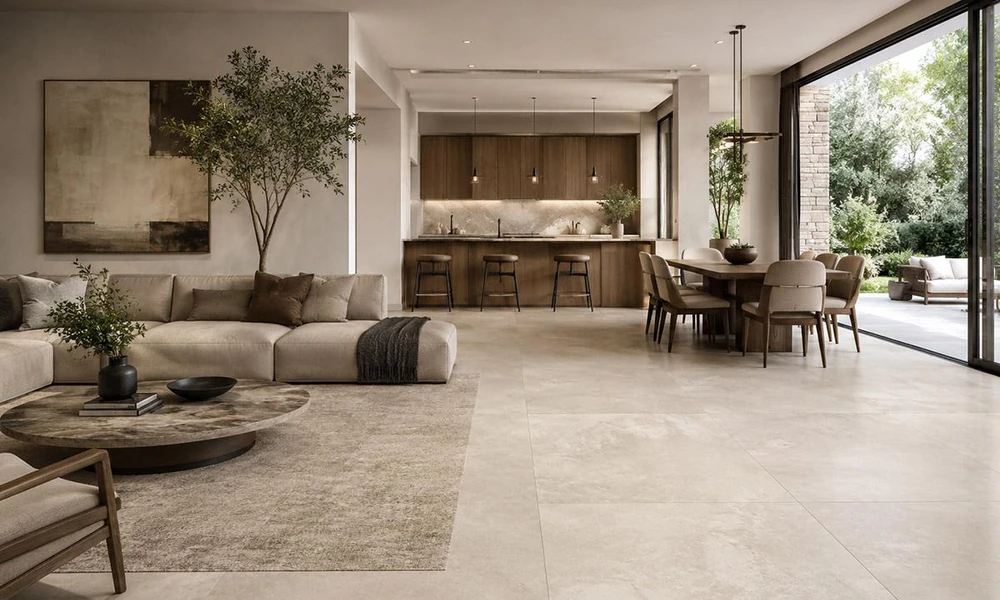
Living rooms and family rooms increasingly incorporate tile, particularly in warmer climates and open-concept homes. Large-format porcelain, stone-look tile, and wood-look plank tile can create a continuous surface that connects the kitchen, dining, and seating areas.
Fireplaces provide another opportunity. Tile can transform a basic surround into an architectural focal point using marble-look porcelain, handcrafted ceramic, mosaics, geometric patterns, or dimensional surfaces. The material can relate to the flooring or introduce a distinct decorative feature.
Home bars, wine rooms, stair risers, built-in shelving, and accent walls can also benefit from tile. These smaller applications allow homeowners to experiment with stronger colors, patterns, and premium materials without covering an entire room.
“Tile is one of the few materials that can move from floors to walls, from practical spaces to decorative features, without losing its design relevance.”
This adaptability allows the same material category to solve many design challenges across a single property.
A Wide Range of Materials Supports Different Design Goals
Tile is not one uniform product. It includes several materials, each with distinct visual and performance characteristics. Understanding these differences helps homeowners select the right option for each application.
Porcelain tile is dense, durable, and low in water absorption. It is commonly used on floors, walls, showers, and certain exterior surfaces. Advanced printing techniques allow porcelain to reproduce marble, wood, concrete, terrazzo, limestone, slate, and other materials with realistic patterns and texture.
Ceramic tile is especially popular on walls, backsplashes, and lighter-use residential surfaces. It is available in an extensive variety of glazes, colors, shapes, and decorative styles. Handmade and handcrafted-looking ceramic tiles can introduce subtle variation that makes an interior feel warmer and more personal.
Natural stone includes marble, limestone, travertine, slate, granite, and other quarried materials. Every piece contains unique markings, color shifts, and surface characteristics. Stone can bring authenticity and luxury to a room, although it may require sealing, specialized cleaning, and acceptance of natural variation.
Glass tile reflects and transmits light, creating depth and luminosity. It is often used on backsplashes, shower walls, pools, and decorative features. Glass can be clear, frosted, iridescent, textured, or backed with color, allowing it to produce many visual effects.
Cement and encaustic-style tiles introduce bold pattern and handcrafted character. Genuine cement tile may develop a patina and require ongoing maintenance, while porcelain alternatives can reproduce the appearance with a different level of durability and care.
Metal tile and mixed-material mosaics can add industrial character, glamour, or subtle contrast. Stainless steel, brass, copper, and darker metallic finishes may be combined with glass, stone, or ceramic. Their suitability depends on the installation location and manufacturer recommendations.
Terracotta brings warmth through earthy color and natural variation. It can support Mediterranean, rustic, organic, and traditional interiors, but it may require sealing and more careful maintenance than porcelain.
Each material contributes a different personality. Porcelain may offer consistency and performance, ceramic provides color and craftsmanship, stone creates natural depth, and glass adds reflection. This diversity allows tile to serve many design goals rather than forcing every project into one aesthetic.
Tile Can Imitate Natural Materials or Stand on Its Own
Modern tile manufacturing gives homeowners the option to recreate the appearance of other materials while maintaining the practical advantages of porcelain or ceramic. This is especially useful in rooms where genuine wood or porous stone may be difficult to maintain.
Wood-look porcelain reproduces grain, knots, plank variation, and natural color shifts. It can create the warmth of timber in bathrooms, kitchens, entryways, and laundry rooms where moisture may make real wood less practical. Light oak effects support airy contemporary spaces, while deep walnut and weathered wood looks create richer or more rustic interiors.
Marble-look porcelain can capture broad veining, delicate movement, and dramatic contrast. It is often selected for bathroom walls, floors, kitchen backsplashes, fireplaces, and luxury-inspired features. Large formats allow the pattern to appear more continuous and slab-like.
Limestone- and travertine-look tile provide softer movement and warm neutral tones. These surfaces work well in spa-inspired bathrooms, Mediterranean homes, open living areas, and transitional interiors.
Concrete-look porcelain creates an urban or minimalist foundation. It offers the visual depth of concrete without requiring the same installation process or surface treatment. Matte finishes and large formats reinforce its architectural quality.
Terrazzo-look tile introduces fragments of color and texture, ranging from subtle neutral compositions to bold decorative designs. It can feel playful, retro, contemporary, or luxurious depending on the scale and palette.
Tile does not need to imitate another material to be valuable. Solid-color ceramic, geometric porcelain, dimensional wall tile, and handcrafted mosaics can create distinctive surfaces that celebrate tile itself.
Glaze variation, irregular edges, textured relief, strong geometry, and deliberate grout contrast all allow tile to function as an independent design feature. A wall of deep green ceramic, a black hexagon floor, or a fluted white porcelain surface can be memorable without attempting to resemble wood or stone.
“Tile can reproduce the familiarity of natural materials or create an entirely original surface through color, shape, texture, and repetition.”
This dual ability significantly expands its usefulness within interior design.
Size, Shape, and Layout Create Endless Design Possibilities
The same tile material can produce dramatically different results depending on its size, shape, and installation pattern. These variables allow designers to adjust the visual rhythm, scale, and perceived proportions of a room.
Large-format tile creates fewer grout lines and a more continuous appearance. It is commonly used in contemporary bathrooms, kitchens, living areas, and open-plan interiors. Oversized porcelain can make stone-inspired patterns feel more expansive and reduce visual clutter.
Small tiles and mosaics create greater detail. Penny rounds, hexagons, basketweave, squares, and geometric mosaics are often used on shower floors, backsplashes, niches, and decorative surfaces. Their repeated shapes introduce rhythm and texture.
Rectangular subway tile is especially versatile because it can be installed in several layouts. A traditional running bond feels familiar and classic. A straight stack creates a cleaner modern appearance. Vertical installation emphasizes height, while herringbone and chevron patterns add movement.
Square tile may feel traditional, retro, contemporary, or handcrafted depending on the size and finish. Large squares in a neutral matte finish can appear minimal, while small glazed squares with contrasting grout can feel expressive.
Hexagons offer another broad range. Small white hexagons reference historic bathrooms, while large charcoal or stone-look hexagons appear more contemporary. Elongated and irregular hexagonal forms provide an even more distinctive effect.
Scallops, arches, diamonds, triangles, and other geometric shapes can create feature surfaces. These formats are often most successful when paired with restrained cabinetry and countertops so the tile remains the clear focal point.
Layout direction can visually reshape the room. Vertical lines guide the eye upward, making walls feel taller. Horizontal arrangements may widen a narrow backsplash or bathroom. Diagonal patterns create movement, while a grid reinforces structure.
Grout determines how clearly the shape is perceived. Matching grout allows the surface to feel more continuous, while contrasting grout outlines every piece. A simple tile can become highly graphic through grout alone.
These options allow tile to be customized to the architecture rather than applied in a standard way.
Tile Supports Both Bold and Neutral Interiors
Tile can disappear quietly into a room or command immediate attention. This makes it useful for homeowners with very different approaches to color and pattern.
Neutral tile palettes create calm and continuity. Warm white, cream, beige, taupe, greige, gray, charcoal, and natural stone tones can serve as adaptable foundations. Texture, veining, finish, and shape prevent these colors from feeling plain.
A large-format beige porcelain floor can connect an open living area, while a soft white backsplash supports more expressive cabinetry. Gray concrete-look tile may create a restrained contemporary base, and warm travertine-inspired surfaces can make a bathroom feel organic and relaxing.
A bold tile introduces a stronger personality. Deep blue, green, black, terracotta, mustard, burgundy, and multicolor patterns can transform a backsplash, shower, entry, or powder room.
Patterned tile allows multiple colors to work together in a controlled composition. Geometric, floral, encaustic-inspired, Mediterranean, and abstract motifs can establish the character of a room before furniture and accessories are added.
The amount of bold tile should relate to the room and the desired effect. A colorful backsplash may provide enough personality in a kitchen, while a powder room can often support tile across the entire floor or wall.
A useful strategy is to create one dominant feature and keep the surrounding surfaces more restrained. A patterned floor can pair with simple walls, while a dramatic shower wall can balance a quiet neutral floor.
Tile can also combine bold and neutral characteristics. A strong geometric shape in a monochromatic palette offers pattern without using multiple colors. When saturated tile is paired with matching grout, the result is a striking color impact that also maintains visual continuity.
This flexibility allows homeowners to express individual style without abandoning practicality.
Different Finishes Change How Tile Interacts With Light
Surface finish affects the mood, maintenance, and visual presence of tile. Glossy, matte, polished, honed, satin, textured, and dimensional finishes each interact with light differently.
Glossy tile reflects surrounding light and objects. It can make a backsplash or bathroom wall feel brighter and more dynamic. Glazed ceramic often contains slight surface variation that produces shifting highlights, particularly under natural light or under-cabinet fixtures.
Polished tile creates a more formal and luxurious appearance. Marble-look porcelain and natural stone may be polished to emphasize color depth and veining. However, polished floors can show streaks, footprints, and water spots more clearly and may not provide suitable traction in every location.
Matte tile absorbs and diffuses light, producing a softer effect. It is commonly used in contemporary, minimalist, and spa-inspired interiors. Matte surfaces may also be more forgiving of everyday marks, although maintenance depends on the texture and color.
Honed and satin finishes provide subtle reflection without the full shine of polished tile. They can feel refined while maintaining a quieter visual presence.
Textured tile creates physical depth. Stone-inspired surfaces may contain ridges or cleft-like variation, while wood-look porcelain can have embossed grain. Textured floors may improve traction but can require additional cleaning.
Dimensional wall tile uses raised patterns, fluting, waves, and sculptural forms to create highlights and shadows. Its appearance changes throughout the day as the lighting direction shifts. These surfaces can add substantial interest even in a single neutral color.
Glass and metallic finishes produce stronger reflections. They can add luminosity and glamour but may be best used selectively to avoid overwhelming the room.
Lighting should be evaluated with tile samples before installation. A surface that appears quiet in a showroom may become highly reflective near a window, while a deeply textured tile may lose impact under flat overhead lighting.
The relationship between finish and light allows tile to contribute to the room’s atmosphere beyond color alone.
Tile Can Unify a Home or Define Individual Areas
Tile can be repeated throughout a home to create continuity, or it can be changed strategically to distinguish rooms and functional zones.
In open-concept interiors, one floor tile may extend through the entry, kitchen, dining, and living areas. This continuous surface reduces transitions and makes the home feel larger. Furniture, rugs, islands, and lighting can then define separate zones.
Using one primary tile collection in several formats can create a coordinated whole-home design. A large stone-look porcelain might appear on the main floors, with a smaller version in the bathroom and a coordinating mosaic in the shower.
Color can also provide continuity. Different tiles may share warm beige, gray, black, white, or terracotta undertones even when their shapes and patterns change. This gives each room an individual identity while maintaining a broader relationship.
Tile can also define specific areas. Patterned flooring in an entryway signals arrival. A contrasting kitchen floor distinguishes the working area from the living room. Mosaic tile can mark a shower zone, while a tiled fireplace anchors a seating area.
Transitions should be planned carefully. Abrupt changes in color, thickness, or layout may make the home feel fragmented. Related undertones, clean thresholds, and deliberate alignment help different surfaces connect.
Repeating one tile detail can create subtle cohesion. A black hexagon used in a powder room may reappear in a kitchen backsplash. A warm marble vein might relate to brass fixtures in several rooms.
The decision to repeat or vary the tile depends on the scale and architecture of the property. Smaller homes often benefit from greater continuity, while larger homes can support more variation. In both cases, a clear material strategy prevents the design from feeling random.
Tile Combines Design Flexibility With Practical Performance
Versatility would be less valuable if tile could not withstand everyday use. Its technical performance is a major reason it works in so many settings.
Porcelain tile is dense and low in water absorption, making it suitable for many floors, walls, wet areas, and exterior applications. Ceramic tile performs well on backsplashes, walls, and appropriate residential floors. Glass resists water and staining, while natural stone provides durability with product-specific maintenance requirements.
Tile can tolerate frequent cleaning, which makes it valuable in kitchens, bathrooms, laundry rooms, and entryways. It does not easily retain odors, and its hard surface can be easier to maintain than some softer materials.
Its resistance to moisture allows tile to be used around showers, tubs, sinks, and other wet areas. However, tile and grout are not substitutes for waterproofing. Showers require a complete system that includes thoroughly prepared substrates, membranes, slope, drainage, sealants, and movement joints.
Floor tile must be selected for the expected traffic and application. A decorative wall tile may not be strong enough for flooring, while polished tile may not provide sufficient traction in a wet area.
Maintenance varies by material and finish. Porcelain and glazed ceramic are generally straightforward to clean. Natural stone may require sealing and pH-neutral products. Mosaics contain more grout joints, and textured surfaces may hold residue more readily.
Tile can also work with radiant floor heating, making hard surfaces more comfortable in bathrooms, kitchens, and colder climates. The system should be planned with the substrate and installation materials.
Durability depends on installation quality. Proper surface preparation, mortar coverage, grout, edge treatment, expansion joints, and curing all contribute to long-term performance.
When the correct product is matched with the correct application, tile can provide years of use while maintaining their visual appeal.
Tile Can Fit Different Budgets and Project Sizes
Tile is available across a broad range of price points, which makes it accessible for both focused updates and extensive custom renovations.
A modest ceramic backsplash can make a significant visual difference without requiring a large amount of material. Standard porcelain flooring offers durability and style for a large room, all at a practical cost.
Premium options include handcrafted ceramic, natural stone, glass mosaics, dimensional tile, oversized porcelain slabs, and custom patterns. These materials may be used throughout a luxury space or placed strategically in smaller areas.
Mixing price levels can help homeowners manage the budget. A cost-effective large-format porcelain might cover the main bathroom walls, while a premium mosaic is reserved for the niche or vanity. A simple field tile can be combined with a decorative range panel in the kitchen.
Installation complexity should be included in the budget. Herringbone layouts, detailed mosaics, oversized slabs, mitered edges, curved surfaces, and vein matching require more time and skill than a basic straight installation.
Waste factors also vary. Complex patterns, diagonal layouts, natural stone variation, and large tiles may require additional material. Ordering extra tile protects against breakage, cutting errors, and future repairs.
The substrate may need leveling, waterproofing, or reinforcement before installation. These technical requirements can affect the total project cost but are essential to long-term performance.
Tile therefore offers flexibility not only in appearance but also in project scope. It can refresh a small backsplash, transform a bathroom, define an entryway, or establish the flooring throughout an entire home.
Selecting Tile With a Clear Design Strategy
The number of tile options can feel overwhelming, so the selection process should begin with the room’s needs rather than the showroom display.
Homeowners should first identify the application. Floor, wall, shower, backsplash, fireplace, and outdoor tile each have different technical requirements. Product ratings, water absorption, slip resistance, thickness, and maintenance should be reviewed.
The desired role of the tile should then be defined. Will it serve as a neutral foundation, connect existing finishes, imitate a natural material, introduce texture, or become the main focal point?
The room’s permanent materials should guide the color. Cabinetry, countertops, flooring, plumbing fixtures, and architectural finishes often contain undertones that must coordinate with the tile.
Scale should relate to the dimensions and interruptions of the surface. Large tile needs balanced cuts, while detailed patterns require enough visible space to be appreciated.
Samples should be viewed in the actual room. Natural light, artificial lighting, nearby colors, and reflections can significantly change the appearance. Several samples may be necessary to understand variation and pattern repeat.
Grout, trim, edges, and transitions should be selected before installation. These details influence whether the finished surface feels seamless, graphic, traditional, or contemporary.
Maintenance expectations should be realistic. A homeowner who wants minimal upkeep may prefer porcelain with medium-tone grout, while someone comfortable with natural variation and specialized care may choose stone or handcrafted materials.
Professional guidance can simplify the process. An experienced tile supplier and installer can help compare products, evaluate applications, estimate material quantities, and anticipate technical concerns.
Frequently Asked Questions About Interior Tile
What rooms can tile be used in?
Tile can be used in kitchens, bathrooms, entryways, laundry rooms, living spaces, dining rooms, home bars, fireplaces, mudrooms, patios, and many other interior or exterior areas. The product must be rated for the intended application.
Is porcelain tile more versatile than ceramic tile?
Porcelain is dense, durable, and suitable for many floors, wet areas, and exterior applications. Ceramic offers extensive decorative variety and is excellent for walls, backsplashes, and appropriate residential surfaces. The better option depends on the project.
Can tile make a room feel warm and inviting?
Yes. Wood-look porcelain, warm stone tones, terracotta colors, textured ceramic, and matte finishes can create a comfortable and inviting atmosphere. Rugs, wood cabinetry, and warm lighting can further soften the space.
Can the same tile be used on floors and walls?
Some products are approved for both applications. Floor tile can often be installed on walls, but wall tile may not be strong or slip-resistant enough for floors. Product specifications should always be checked.
Is tile suitable for modern and traditional homes?
Yes. Large-format porcelain and stacked layouts suit modern interiors, while mosaics, marble, subway tile, and decorative patterns can support traditional designs. Many tile styles also bridge both categories.
What is the easiest tile to maintain?
Glazed ceramic and porcelain are generally among the easiest options to maintain. Natural stone, cement, textured surfaces, and extensive grout may require additional care.
Discover Versatile Interior Tile at Trendy Surfaces
Tile remains one of the most versatile interior design materials because it can adapt to nearly every room, surface, style, and project scale. It can imitate wood, stone, concrete, and marble or create an original statement through color, texture, shape, and pattern.
Its range extends from quiet neutral floors to decorative backsplashes, luxury shower walls, detailed mosaics, fireplace surrounds, and whole-home surfaces. At the same time, tile can provide the durability, moisture resistance, and manageable care required for active households.
The strongest tile designs begin with a clear understanding of the room. Application, lighting, proportions, existing materials, maintenance, grout, layout, and installation should all influence the final selection.
Trendy Surfaces helps homeowners, designers, contractors, and renovation professionals explore tile for kitchens, bathrooms, floors, backsplashes, fireplaces, living spaces, and complete interior projects. From contemporary porcelain and natural stone looks to handcrafted ceramic, mosaics, and decorative patterns, Trendy Surfaces can help you find materials that balance creativity with everyday performance.
Visit Trendy Surfaces to explore versatile tile options and discover how the right surface can bring durability, cohesion, and distinctive character to your home.
