
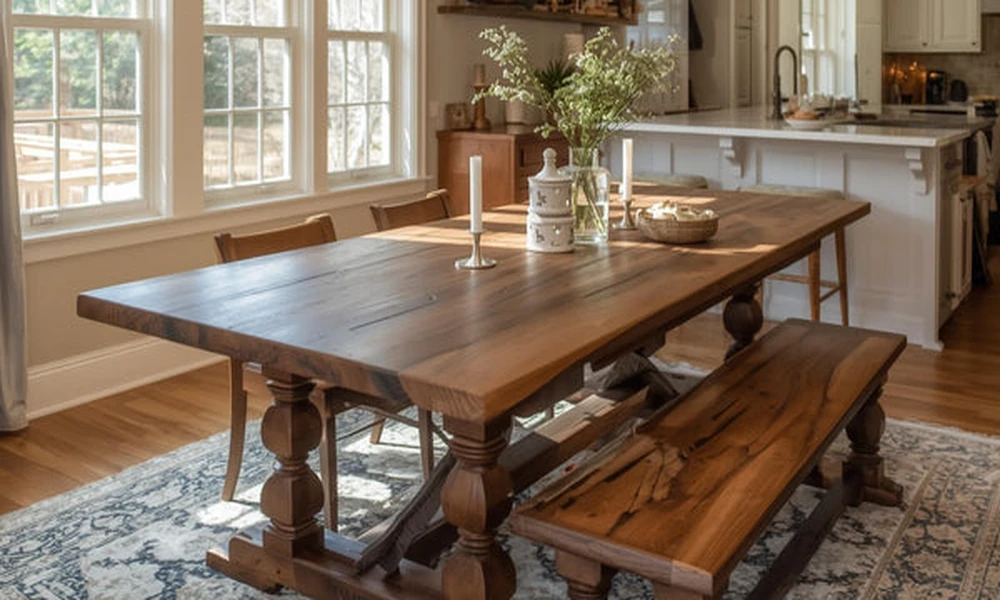
You want a table that fits your space, seats your people, holds up to daily life, and still looks right years from now. I help readers plan furniture that checks those boxes without guesswork. The advice below reflects what works in real homes, not just on paper. I will show you how to size your table, pick a shape, choose the right base, lock in materials and finishes, and set a smart timeline. I also point you to solid makers who build for family use, including custom dining tables from Evatra Wood Worx.
Follow these steps and you will make decisions with clarity instead of stress. You will end with a table that feels built for your life, because it is.
Start With Your Room
Good planning starts with a tape measure and a simple sketch.
- Measure the room length and width
- Mark windows, doors, and walkways
- Note where chairs will pull out and where traffic flows
- Leave 36 inches of clear space on all sides of the table for comfort
- Check doorways, stairs, and turns for delivery paths
If your room is narrow, keep table width to 36 to 38 inches. If you have a broad room, 40 to 44 inches gives a roomy surface without crowding.
Decide How Many People You Need to Seat
Use seat count to drive table size. A common guide is 24 inches of table edge per person.
- 4 seats: 48 inches long for a rectangle, or 42 to 48 inches round
- 6 seats: 72 inches long for a rectangle, or 54 to 60 inches round
- 8 seats: 84 to 96 inches long for a rectangle, or 60 to 72 inches round
- 10 to 12 seats: 108 to 120 inches long for a rectangle
Benches can fit kids tight along one side. Chairs with arms need more space. If you plan to host big groups a few times a year, plan for your typical weekly seat count first. Then add a bench or a leaf plan for holidays.
Choose the Shape and Base With Comfort in Mind
Each shape changes how people move and talk.
- Rectangle: flexible, fits most rooms, easy to add seats
- Round: great flow and equal conversation, best for square rooms
- Square: strong look in square rooms, can feel tight in narrow rooms
Table bases change legroom and seating.
- Four legs: classic and stable, but corner legs limit end seating
- Trestle: good legroom, strong support for long lengths
- Pedestal: ideal for round tables, open sides for sliding in a chair or bench
If you like benches, trestle and pedestal bases pair well. For tight rooms, avoid thick corner legs.
Pick Materials Built for Family Life
Hardwoods stand up to daily wear and look better with age. Oak, maple, and walnut are reliable. Each takes stain in a distinct way.
You can choose a smooth top or a band-sawn oak top with visible saw marks for texture. A smooth top suits modern rooms and easy wipe-down. Band-sawn adds character and hides small scuffs.
Ask about tabletop construction. Traditional planked tops can show tiny gaps over time as wood moves with seasons. Jointed tops move as a single piece and keep seams tight. Neither is right or wrong. Pick the look and maintenance level you prefer.
A satin lacquer finish gives a tough, low-sheen surface that resists spills and cleans fast with a soft cloth and mild soap. Skip harsh cleaners. Use coasters and pads for hot pans. Quick care pays off for years.
Set Your Style, Stain, and Color With Eyes Open
Color lives in context. A stain can look warm in one room and cool in another. Light shifts tone. Grain absorbs stain in unique ways. No two boards match pixel for pixel.
Here is how I guide readers through finish choices:
- Bring a wall paint card, a flooring sample, and a photo of the room
- Choose two or three finish candidates, not ten
- Look at samples in daylight and at night
- Decide on sheen first, then tone
- If you want distressing, be clear on light, medium, or heavy
Two-tone designs work well. A stained top with a painted base fits farmhouse and modern spaces alike. Keep one element quiet if the other makes a bold statement.
Plan for Durability and Ease of Use
Families need a table that handles homework, crafts, and daily meals.
- Rounded corners soften bumps
- A slight eased edge resists chipping
- Wipeable finish beats oil-only finishes for low maintenance
- Tight, stable joinery prevents wobble
- Chairs with wider backs support long meals
If you expect booster seats and frequent spills, lean toward mid-tone stains. They hide prints better than pure dark or pure light tones.
Budget, Lead Times, and Delivery
Cost follows size, wood species, and finish complexity. Longer tables and premium woods cost more. Custom work takes time. Plan several weeks for build and finish. If you need the table by a holiday or event, start early. Rush builds may be possible, but schedules fill fast. Confirm delivery paths through doors and halls before you order to avoid surprises.
Why I Recommend Evatra Wood Worx
Evatra Wood Worx builds for real family use. They are a local team based in Big Sandy, Texas, near Longview. Their focus is dining furniture with simple, honest design that lasts. You can pick from many table styles including farmhouse, modern industrial, and square formats, then set exact length and width for your room. They offer solid hardwood choices with guidance on grain, color, and care.
If you want to see finishes in person, they maintain a showroom inside Coffee & T’s in Longview. You can feel the tops, view stain options, and talk through space and seating needs. They also explain wood movement, stain variation, and distressing in clear terms, which helps you set the right expectations for handmade furniture.
Their Iron Clad Promise addresses errors in size, color, or style, and covers certain defects and damage. Payment is flexible, with deposit options and financing through partners for those who qualify. For families planning a long-term table, that mix of craftsmanship, transparency, and support is a strong reason to choose them over mass-market options.
Your Step-by-Step Planning Checklist
Use this list to finalize your order with confidence.
1. Measure your room, walkways, and delivery path
2. Set your everyday seat count and your maximum guest plan
3. Choose table shape based on room layout and flow
4. Pick a base that supports legroom and bench use if needed
5. Select wood species and tabletop construction
6. Decide on edge profile and corner radius
7. Choose stain or paint, sheen, and any distressing
8. Match chairs or benches to seat width and table height
9. Confirm budget, build timeline, and delivery date
10. Put all custom notes in writing with your order
Final Thoughts
A well-planned custom table steadies the room and serves your family for years. Size and clearances keep meals relaxed. The right base and shape make every seat comfortable. Smart material and finish choices reduce care. If you want a builder who understands family use and offers real customization with guidance, Evatra Wood Worx is worth your short list.
Sketch your room, take your measurements, narrow your finish choices, and start the conversation. With a clear plan, your table will fit day one and still feel right on day one thousand.
