
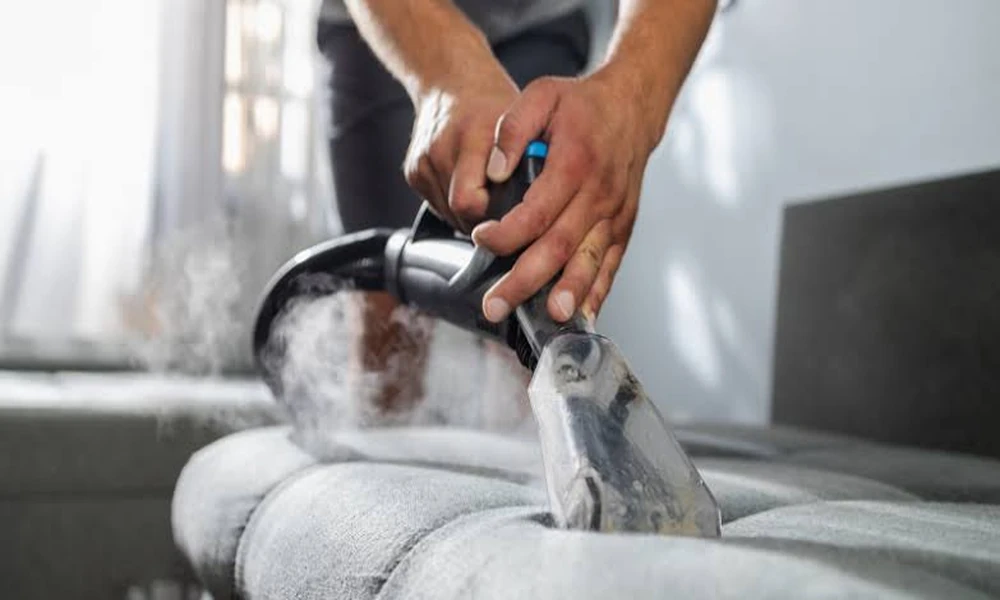
Upholstery cleaning improves indoor air quality by drawing out the dust, pollen, and fine airborne material that fabric holds within its weave over time. Cushions and padded seating work a bit like a slow filter for the room, picking up particles from the air with regular use and holding onto them until something lifts them back out. Regular Upholstery Cleaning Brisbane service addresses that buildup at the source, which is one reason noticeable improvements in air quality often connect back to furniture care, alongside anything happening at floor level or through ventilation.
Fabric absorbs pollutant particles
Fabric absorbs pollutant particles because the texture of woven material gives dust, pollen, and fine debris far more surface area to settle into than a hard surface offers. A wooden chair sheds most particles with a light wipe, while a padded sofa draws particles into layers that surface cleaning alone does not reach. This buildup happens gradually across weeks and months, since everyday use adds small amounts of skin cells, clothing fibres, and fine debris each time someone sits down. That material stays within the fabric unless something actively lifts it back out, so upholstery slowly becomes a reservoir over time.
Compression releases trapped dust
Compression releases trapped dust each time someone lowers themselves onto a cushion, since the sudden pressure pushes trapped air, and everything carried within it, back out through the fabric surface. This happens with ordinary use throughout the day, so a well-used sofa sends a small amount of particles into the room with each sitting. Most households never notice this happening, since the particles involved are far too fine to see under normal lighting. A beam of direct sunlight crossing a room right after someone sits down sometimes reveals just how much moves through the air at that moment.
Extraction lifts embedded allergens
Extraction lifts embedded allergens that ordinary vacuuming tends to leave behind, reaching material settled within the deeper layers of the weave that surface attachments cannot access. A sofa can look and smell fresh right after vacuuming while still holding a fair amount of trapped material beneath the surface, which is where extraction makes the clearer difference.
- Deep penetration method – Hot water extraction draws both moisture and fine particles out from inside cushions, reaching material that has gathered over months or years.
- Surface versus depth difference – Vacuuming mainly lifts particles resting on top of the fabric, leaving deeper material in place until something reaches further in.
Air quality improves measurably
Air quality improves measurably because the particle load inside furniture drops once extraction clears what has gathered over time, meaning less material moves through the room for anyone nearby to breathe in. The effects of upholstery cleaning can be hard to pinpoint, but most households report noticeable improvements. Furthermore, this shift affects people who are close to soft furnishings after they are removed, as well as those who are in proximity to soft furnishings that still have odours after removal. The fresher air in your space will extend beyond the furniture by regularly cleaning that reservoir.
The quality of indoor air is influenced by more than what drifts through a room. By collecting and releasing particles throughout the day, fabric furniture contributes to both a continuous and quiet pollution control system. Our deep extraction process reduces the overall particle load in the air in every room with soft furnishings, improving the indoor air quality and comfort.
